



That pile of orange peels you toss after breakfast? Turns out, they could do more for your skin than half the serums on your bathroom shelf. Science is finally catching up to what natural skincare enthusiasts have long known, and the results are quite interesting.What is actually happening to your skin as you ageThere are two ways your skin ages: naturally over time and through what dermatologists call photoaging, the faster breakdown caused by UV exposure. When UVB rays hit your skin, they start a chain reaction of oxidative stress that fills your cells with free radicals that break down collagen and elastic fibres. The results are wrinkles and that annoying dullness that no filter can completely fix.Your body has built-in defences, such as antioxidant enzymes like superoxide dismutase and catalase, but prolonged sun exposure can wear them down. When those defences get weaker, pro-inflammatory compounds come in and activate enzymes called matrix metalloproteinases (MMPs), which break down the structural proteins that hold your skin firm.Why orange peel oil is having a moment in skincare sciencePolymethoxyflavones, or PMFs, are a type of chemical that is found in a lot of cold-pressed orange peel oil (CPO). These are not just regular antioxidants; they are really good at doing what your skin needs when it is stressed by UV damage.A study published in Journal of Functional Foods found that putting CPO on the skin of people who had been exposed to UVB light raised the levels of antioxidant enzymes, lowered oxidative markers like hydrogen peroxide, and most importantly, slowed down the activity of MMP-2 and MMP-9, the enzymes that break down collagen. The protective effect depended on the dose and was about the same as that of vitamin E, one of the best-known antioxidants in skin care.What makes it even more interesting is that when PMFs are exposed to UVB light, they partially break down into stronger, hydroxylated derivatives, such as 5-demethyltangeretin. These compounds build up in the skin and make the protective window last longer. It is almost like the ingredient works better right when you need it the most.
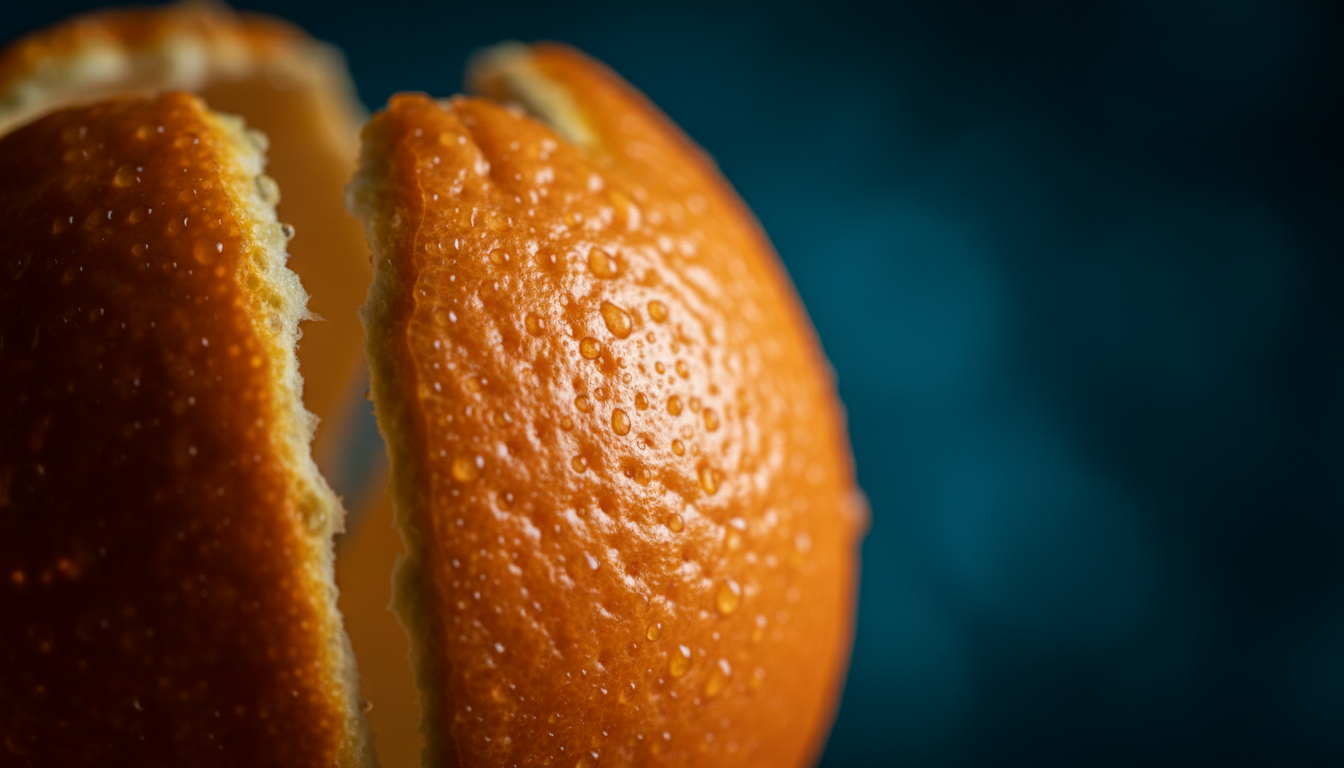
Orange peels contain polymethoxyflavones, compounds that rival vitamin E in UV protection.
The fish oil crossover you did not see comingResearchers have been trying something even more advanced: mixing orange peel extract with fish oil rich in omega-3s and then encapsulating the mixture in tiny alginate hydrogel beads. A 2024 study in the journal, Scientific Reports, said that these beads slowly release their active ingredients over 45 to 120 minutes, giving skin a steady dose of anti-inflammatory and antioxidant support instead of a quick hit.The beads also prevented enzymes from breaking down elastin and collagen, and the hydrogel matrix supported fibroblast growth, the skin cells that help heal wounds. Compared to a regular drugstore serum, this one is a lot more precise in how it delivers its ingredients.How to actually make a serum at homeYou do not need a lab to do this. The basic steps are to wash and thoroughly dry the fresh orange peels, then add them to a carrier oil, such as jojoba or sweet almond oil, either by cold pressing or by gentle, low-heat infusion. You can make a working, science-backed serum for a few dollars by straining the mixture and putting it in a dark glass bottle since light breaks down the PMFs.For best results, use it every day before going out in the sun. One real warning: orange peel oil can make people with sensitive skin more sensitive to light, so you have to patch-test it first.Do you want to make it better? You can combine orange peel extract with other botanicals that work well together, such as curcumin, bakuchiol, or silymarin, to enhance anti-ageing effects by targeting oxidative stress, inflammation, and collagen loss from several angles at once.The bigger pictureNatural skincare has earned a reputation for being feel-good, but there is little scientific evidence to back it up. Orange peel is one of those times when the proof is really coming in. More clinical trials are needed to ensure that the formulations are consistent and effective over the long term, but the basic ideas are sound. Millennials who have been quietly sceptical of both too many synthetic ingredients and the vagueness of the wellness world may find this to be a good middle ground to explore.