


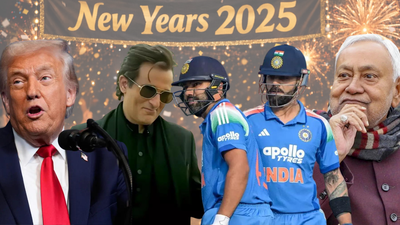
History has a bad habit of ending careers too early. In politics, sport, markets and culture, the verdict is often delivered with theatrical certainty: finished, washed up, irrelevant. Obituaries are drafted not after deaths but after defeats, an election lost, a season misfired, a box-office stumble, a balance sheet gone sour. And yet, every so often, history reverses itself.In 2025, it did so repeatedly.This was a year that refused to move on. Veterans returned to power, ageing athletes rewrote timelines, industries pronounced dead rediscovered audiences, and assets long dismissed as old-fashioned surged back to prominence.The stories that defined 2025 were therefore not just about return, but about reassessment. Who gets written off? Who gets another chance? And what does it say about a moment when the past keeps barging back into the present?
Don(ald) ko pakdna namumkin hai
Donald Trump’s return to the White House has not been quiet, cautious or conventionally diplomatic. Instead, it has been loud, transactional and deliberately theatrical, propelling him back to the very front of global politics. Where previous presidents relied on alliances and institutions, Donald Trump has doubled down on leverage, economic, military and rhetorical.Trade has been his opening weapon. Tariffs, once a negotiating tool, have become a worldview. Trump has revived and expanded them not only against rivals like China but also as instruments of political punishment, threatening “secondary tariffs” on countries that continue to buy Venezuelan oil. The message is simple: align with Washington or pay a price. It is blunt power politics, dressed up as economic nationalism.On war and peace, Trump has cast himself as a global problem-solver, repeatedly claiming credit for “ending” or freezing conflicts through pressure and deal-making. Ceasefires are framed as personal victories, diplomacy as a reflection of his own authority. Critics argue these claims often oversell fragile truces, but the narrative has been effective: Trump as the leader who forces outcomes where others dithered.Together, tariffs, war claims, regional showdowns and unresolved scandals (Epstein Files) have ensured one thing: Trump is not merely back in office, he is back at the centre of the global conversation, setting its tempo on his own combustible terms.
Haar ke jitne waale ko ‘Nitish ‘ kehte hain
India’s state politics gave 2025 another dramatic reversal. In Bihar, veteran politician Nitish Kumar and his allies delivered a landslide that few inside and outside the state had forecast a year earlier. The National Democratic Alliance (NDA) won an overwhelming majority in the 243-seat assembly, with the BJP and its partners accounting for 202 seats; JD(U), led by Nitish Kumar, emerged a major beneficiary with 85 seats. The scale of the victory turned predictions of a “senior leader’s sunset” into a political reset.
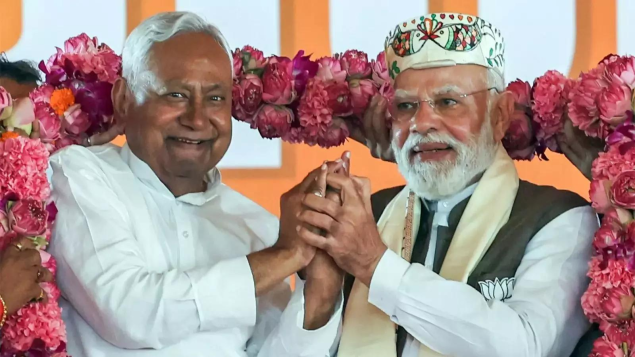
What explains the comeback? Partly it was tactical: a campaign that emphasised welfare and delivery, and an alliance that presented a coherent local offer at a moment when opposition narratives failed to cohere. But it was also narrative: longevity can be reframed as experience when voters prioritise stability and public goods. For Nitish, the verdict was not only survival; it was renewal: a reminder that in many democracies re-emergence is often the prize for perceived competence.
Ro-Ko: Class is permanent
2025 proved to be a triumphant year for Rohit Sharma and Virat Kohli, marking a striking comeback that silenced doubts about their form and fitness. After stepping back from certain formats, both stars returned to India’s ODI and domestic cricket arenas with flair.
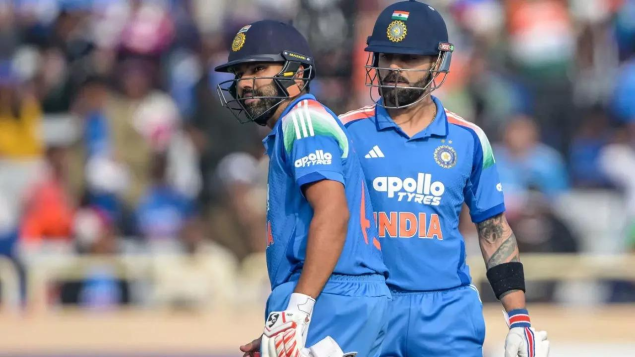
Kohli’s brilliance was impossible to ignore, highlighted by a scintillating 131 off 101 balls in the Vijay Hazare Trophy. He went on to amass over 650 ODI runs in the year, reclaiming his position as India’s run-machine. Rohit, too, made a statement with a destructive 155 off 94 balls, showcasing the timing and power that have defined his career.Their performances helped quiet doubts about longevity and suggested they can still contribute meaningfully as India builds towards the 2027 World Cup.
Indian Women’s cricket: Not a breakthrough, a payoff
If sport needed a story that felt transformative rather than merely restorative, Indian women’s cricket supplied it. Long overshadowed by the men’s game, India’s women won their first ICC Women’s World Cup in 2025, beating South Africa by 52 runs in the final staged at home. The victory was historic and sudden in its cultural effect: the tournament rewrote the visibility of women’s cricket in India, delivering new audiences, sponsorship attention and a reappraisal of what domestic structures can produce.
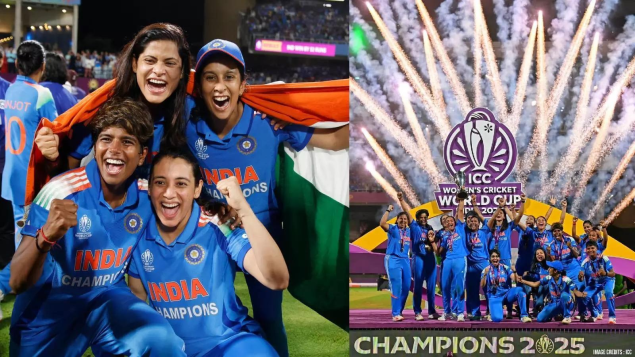
The deeper point is systemic. A triumph like this is not an isolated miracle; it reflects years of investment, growing professionalism and a changing media ecology ready to amplify success. For many girls and young women in India, the 2025 World Cup was more than a trophy — it was an invitation.
Box-office bounce
Cinema’s 2025 story was a classic industry comeback: theatre doors reopened in force and a handful of high-scale films dominated the box office, signalling a new appetite for communal spectacle. At the forefront was Dhurandhar, which provided Bollywood with a powerful year-end finish. Directed by Aditya Dhar and headlined by Ranveer Singh, the first part of the two-film spy saga traces a decade-long Indian intelligence operation deep inside Karachi’s criminal and political networks. Released on 5 December, the film remains in theatres, with domestic earnings reported at over Rs 730 crore. Its second instalment is due in March 2026.
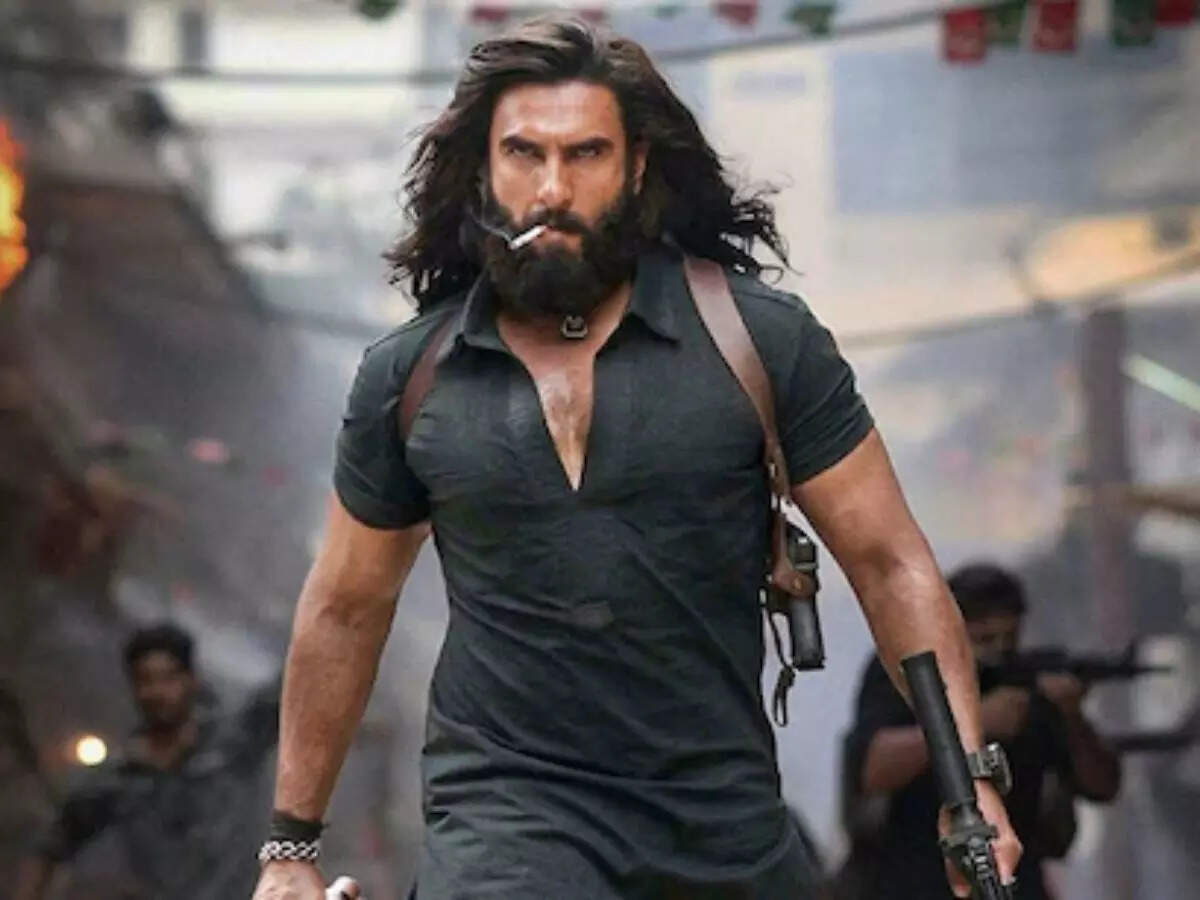
The box-office momentum began early with Chhaava, Vicky Kaushal’s period drama on Chhatrapati Sambhaji Maharaj, which crossed Rs 500 crore to become the year’s first major hit. Folklore-driven spectacle followed with Kantara: A Legend – Chapter 1, which earned more than Rs 700 crore, buoyed by strong word of mouth and striking visuals.Romantic drama Saiyaara emerged as one of 2025’s biggest surprises, crossing Rs 400 crore worldwide. Animation also defied expectations, with Mahavatar Narsimha racing past Rs 100 crore within ten days.
Actors’ second acts
2025 has marked a high-profile return for Akshaye Khanna and Emraan Hashmi, each reclaiming attention in sharply different ways.Akshaye Khanna’s comeback has been defined by authority rather than volume. His performance in the big-ticket spy thriller Dhurandhar reminded audiences why he remains one of Hindi cinema’s most reliable character actors. Calm, calculating and quietly menacing, Khanna once again proved his ability to elevate mainstream cinema through subtlety.
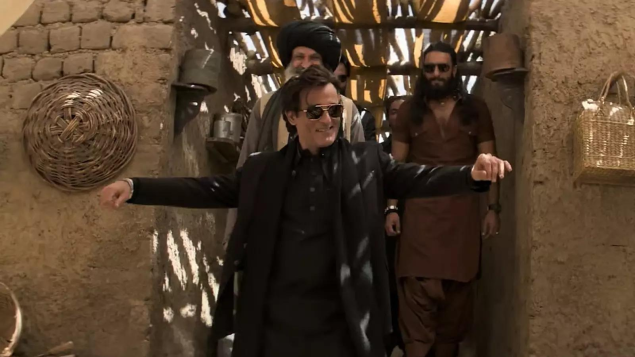
Emraan Hashmi has enjoyed one of the most talked-about moments of his career thanks to a surprise cameo in The Ba**ds of Bollywood. He returned to serious, grounded storytelling with Ground Zero, playing a BSF officer in a role that leaned heavily on restraint and emotional weight. Later in the year, his courtroom drama Haq further underlined a shift away from formula and towards character-driven narratives.
The Bahu returns
Smriti Irani’s arc is a reminder that comebacks sometimes take the scenic route. After losing the high-profile Amethi seat in the 2024 Lok Sabha race, Irani reappeared in public life by reconnecting with audiences through cultural engagements and media moments that leaned on the persona that first made her famous. Her return was less about reversing a single result than about reframing public relevance across platforms — a phenomenon increasingly common where politics and popular culture overlap.
The return of maximalism
Comebacks aren’t only human. Tastes revive, too. After a decade dominated by Scandinavian restraint, 2025 saw a vigorous revival of 1980s-style maximalism: saturated colours, layered patterns and an appetite for storytelling through objects.

Design commentary from outlets and practitioners described the shift as a reaction against uniformity — an embrace of personal accumulation and boldness rather than austere minimalism. The interiors moment was emblematic of a wider cultural mood: after years of caution, people wanted their spaces to feel lived in and richly idiosyncratic.
All that glitters is – Gold & Silver
Gold and silver emerged as two of the standout performers of 2025, as investors across the world turned to precious metals amid persistent uncertainty. Gold surged to fresh record highs during the year, cementing its status as the ultimate safe haven at a time when inflation worries, geopolitical flashpoints and fragile financial markets unsettled confidence. Expectations that major central banks would eventually ease interest rates also played a role, reducing the appeal of yield-bearing assets and making gold more attractive. Adding to the momentum, central banks—particularly in Asia—continued to build up gold reserves, tightening supply and reinforcing bullish sentiment.While it shares gold’s reputation as a store of value, silver benefited from a powerful industrial demand story in 2025. Rapid expansion in solar energy, electric vehicles, data centres and advanced electronics sharply increased consumption, at a time when global supply struggled to keep pace.
The year the Pawars found common ground again
After two years of public acrimony and political separation, 2025 has delivered an unexpected moment of unity for Maharashtra’s most influential family. Ajit Pawar’s NCP and the NCP (Sharad Pawar faction) have decided to contest the Pimpri-Chinchwad and Pune civic polls together, marking their first formal understanding since the 2023 split.Ajit Pawar framed the tie-up as a strictly local arrangement, saying the ‘clock’ and the ‘tutari’ had come together for development-focused municipal elections. He pitched the contest as a fight to reclaim civic bodies from mismanagement. From the Sharad Pawar camp, Rohit Pawar said the decision followed extensive consultations with party workers, stressing that it was driven from the ground up rather than by senior leadership.
Honourable mentions: The quiet comebacks of 2025
Not every comeback reshaped politics or rewrote record books. Some were smaller, subtler — noticed more by attentive audiences than headline writers — but still meaningful in what they represented.
MS Dhoni
Dhoni did not return as a full-time cricketer, nor did he dominate scorecards. Yet his continued presence in the IPL, mentoring, finishing games, drawing packed stadiums, was itself a quiet rebuttal to retirement narratives. The comeback here was symbolic: relevance without reinvention.
Britney Spears
While not a musical comeback in the traditional sense, Spears’ gradual re-entry into public life after years of conservatorship marked a personal reclamation. The absence of a chart-topping album made it less spectacular — but culturally significant nonetheless.
Attempts that didn’t land
Not all redemption arcs resolve neatly. Some falter, stall, or expose how unforgiving public memory can be.
Kevin Spacey
Spacey’s efforts to return to mainstream cinema following acquittals and legal relief were met with industry hesitation. While no longer legally barred, the court of public opinion proved far harder to persuade.
Sydney Sweeney
In 2025, Sydney Sweeney tried a tightly managed comeback aimed at shedding her TV-star image and gaining film credibility. It proved harder than planned. Americana arrived with festival buzz but quickly fizzled at the box office. Echo Valley, opposite Julianne Moore, earned polite notices before slipping quietly to streaming. Her biggest bet, Christy, opened weakly, reviving doubts about her box-office pull. Off screen, an American Eagle campaign triggered backlash over its tone-deaf slogan.Perhaps, visibility is not the same as momentum.
So where does 2025 leave us?
If 2025 proved anything, it was that history rarely travels in straight lines. It doubles back, hesitates, and sometimes drags the past into the present whether we ask for it or not. The year’s comebacks were not acts of nostalgia so much as stress tests of memory, patience and power. Who still commands attention? Who can translate recognition into relevance?Crucially, 2025 also punctured the fantasy that every return deserves applause. Some revivals thrived because they answered a real hunger, for stability, craft, authority or spectacle. Others collapsed under the weight of expectation, reminding us that visibility is not momentum and familiarity is not forgiveness. A comeback, as this year showed, is not a victory lap; it is a second audition.