


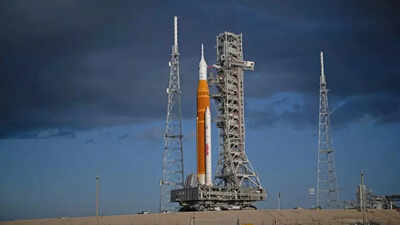
With the Artemis II mission launching its astronauts outside Earth’s magnetic field for the first time on 1 April 2026 in over 50 years, NASA is setting up a 24/7 solar watch to monitor potential high-energy radiation threats. According to NASA, the greatest risk to the crew from the sun is from Solar Energetic Particles (SEPs). These particles are released during events such as solar flares and can penetrate a spacecraft’s hull, posing serious health risks to the crew.To provide enough advanced notice of possibly hazardous solar activity for Artemis II during its 10-day lunar flyby, NASA has established a Moon to Mars Space Weather Analysis Office to provide forecasts of potential hazardous solar activity. The Moon to Mars Space Weather Analysis Office uses a fleet of satellites orbiting the Sun to track sunspot activity, the only accurate method currently available for issuing warnings about potential solar flares and SEPs. In addition, they are also using data collected on Mars by the Perseverance rover to aid in this analysis. If Artemis II’s crew receives a warning from the HERA sensors onboard the spacecraft about an increase in the number of SEPs, they have been trained to create an ‘improvised storm shelter’ using the mass in their spacecraft to provide needed protection from potential solar radiation threats during the lunar flyby.
How solar eruptions penetrate spacecraft
The Artemis II astronauts will be exposed to solar energetic particles (SEPs) when they cross into space outside of Earth’s magnetic field. The SEP High-Energy Particle (HEP) pulse events (caused by solar flare or coronal mass ejection events) that reach the spacecraft after being ejected from the Sun are very high-speed particles of varying energy levels travelling at extremely high speeds. According to NASA, these particles are so fast that they can reach the spacecraft in less than one hour and could penetrate its walls, damaging human cells and electronic systems.
How a Mars rover protects lunar astronauts
NASA has developed a unique tactical approach to monitoring for SePs associated with the Artemis lunar program by utilising the Mars Perseverance rover, which provides a low-cost means for monitoring solar activity from a Martian vantage point. The Mastcam-Z cameras on the Mars Perseverance rover will be able to photograph sunspots and solar activity that are currently on the far side of the Sun (i.e., from Earth’s perspective) about two weeks before they rotate into view of astronauts on Artemis II. This will give scientists significant lead time to warn astrometeorologists about potentially dangerous flare events.
What are HERA radiation sensors ?
The Orion spacecraft incorporates a Hybrid Electronic Radiation Assessment (HERA) system that consists of six real-time sensors distributed throughout the cabin to measure radiation dose rates. The HERA system will provide a real-time alarm that triggers an audible alert, notifying the crew to seek shelter or take other protective action if a significant spike in radiation levels is detected.