


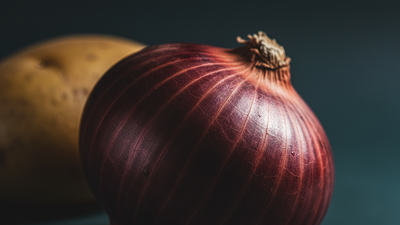
You may not have noticed it, but you have probably tossed the onions and potatoes into the same corner of your pantry without a second thought because they are both vegetables and neither needs to be refrigerated. Completely logical, right? Turns out, not so much. This one small habit could be quietly harming your groceries every single week.Pantry mistake you did not know you were makingIt may seem like onions and potatoes would make good roommates, but they are actually bad for each other. After being picked, both vegetables are biologically active, meaning they breathe, release moisture, and emit gases into the surrounding air. Onions do not like being stored together in a closed or poorly ventilated space because moisture builds up, creating a humid microclimate.High humidity is like a welcome mat for fungus to grow. Research published in Materials Today: Proceedings shows that onions stored in a naturally ventilated space rot and lose weight much faster than those stored in a space with actively circulated air. In a home pantry, this means that onions will go soft, sprout, or rot within a few weeks of you buying them.It is not moisture; it is just chemistryAs potatoes get older, they release ethylene gas. Ethylene is the same chemical that makes fruit ripen on the counter. It also makes onions grow faster. When your onions are next to potatoes, they get a steady stream of this gas that speeds up their metabolism, makes them sprout, and speeds up their decay.At the same time, the potatoes are not doing well either. According to a study, Kinetics of quality change associated with potatoes stored at different temperatures, the quality of potatoes changes a lot depending on the temperature and conditions around them. For example, warmer, more humid places make potatoes sprout, soften, and break down nutrients faster. In this case, neither vegetable is winning.
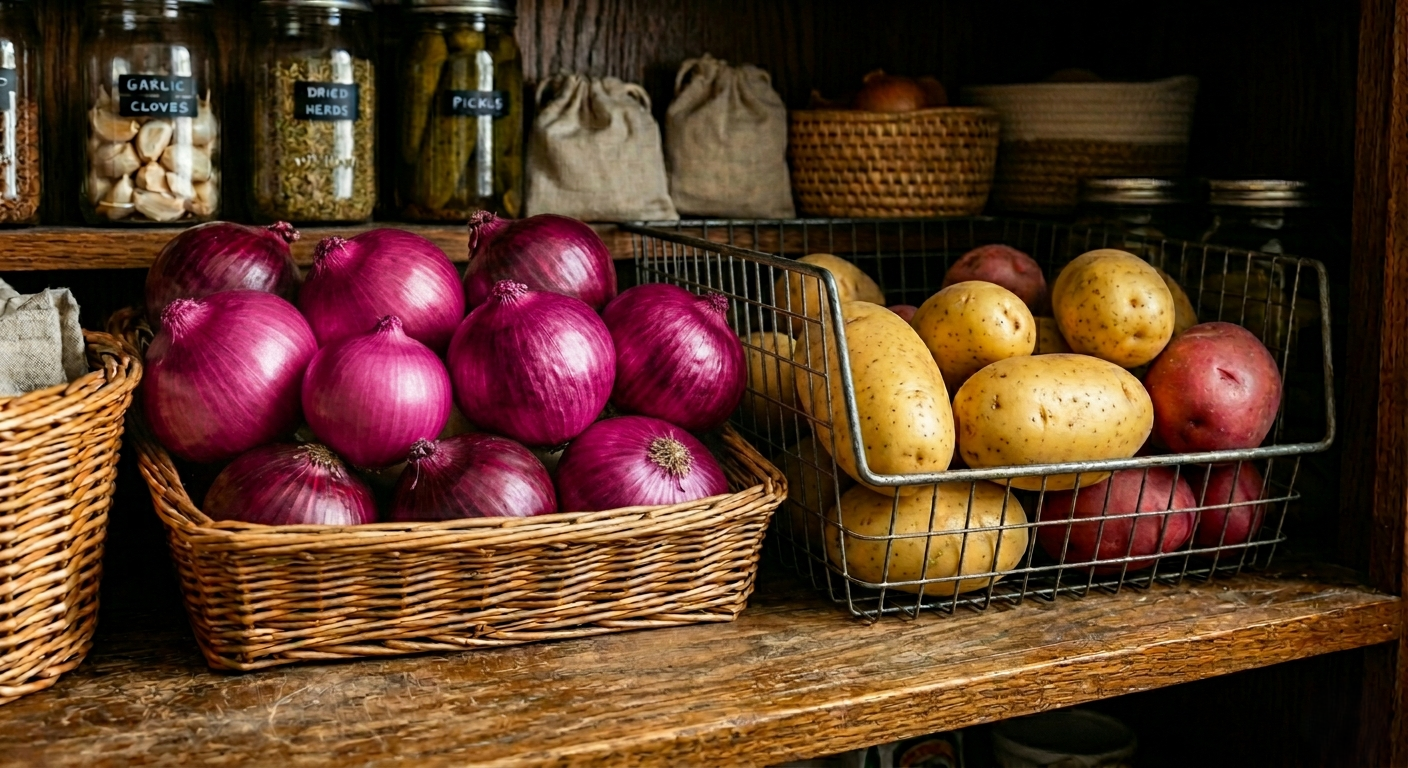
Separating the vegetables into well-ventilated, cool, and dry spaces significantly extends their shelf life.
What actually happens to your onionsThink about the last time you reached for an onion only to find it already soft or sprouting a little green shoot. It was not bad luck; it was just bad storage. Onions undergo several physical changes during storage: they lose water weight, begin to sprout, and their outer layers begin to break down. These processes happen naturally over time, but poor conditions accelerate them.When you expose your onions to ethylene, too much moisture, and not enough air flow, it basically stacks the deck against them. Things that could have lasted for a month or more start to break down in just a few weeks.So where should your onions actually live?Onions like to be in a cool, dry, and well-ventilated place. Instead of plastic bags or sealed containers, use mesh bags or open baskets. As long as the potatoes are not sharing the space, a pantry shelf with good airflow works well. Potatoes, on the other hand, like it a little cooler and with a little more humidity. They can handle darker conditions and even do better with some moisture, which is the opposite of what onions need. It really helps to give each vegetable its own space, even if it is just a few feet apart in separate containers.Small change, real resultsBy simply improving airflow, you can reduce onion weight loss and decay rates by up to 25%. You do not need a climate-controlled storage unit for this. Just by switching from a closed bowl to a wire basket, or moving your onions to a different shelf, you can meaningfully extend their shelf life.At a time when grocery prices are still painfully high and food waste is a growing concern, these small adjustments add up. Sometimes the most impactful kitchen upgrades are not expensive gadgets or overhauls; they are just knowing which vegetables need a little space from each other.