


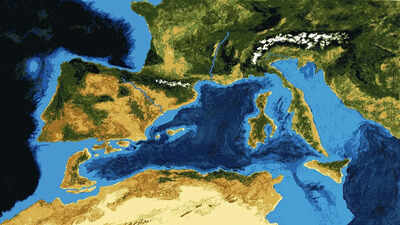
It is hard to think of the earth where you are standing as being once one of the most inhospitable locations on earth, while sunbathing on a beach in the Mediterranean. Nonetheless, had you been travelling back in time six million years ago, you wouldn’t have seen a horizon line anywhere. Rather, what you would find is a flat surface of desert made up of sharp salt crystals and hallucinations due to the extreme temperatures. Such a gigantic structure has been termed a salt giant and is lying under the bottom of the sea, with sedimentary layers and water covering it.This period was not just a drought but rather a geological makeover that occurred on an epic scale between the two continents. Essentially, the sea was locked away from its major source of supply, the Atlantic, and thus became a huge baking tray for the whole basin. Over hundreds of thousands of years, the level of water would rise and fall. As a result, a graveyard of minerals was left behind, which determined the chemical nature of the basin.Sea held in tectonic lockdownIt is hard to imagine how big the changes were back then. What had been an area bigger than some countries was reduced to a vast depression due to the locking up of all natural channels through which the seawater was entering the basin. Due to this process, there was no constant influx of seawater to compensate for the evaporation processes. Thus, the concentration of salt increased to such a high level that it could kill almost all living creatures inhabiting the sea basin.Perhaps the most notable among these is the study titled Causes and Consequences of the Messinian Salinity Crisis. The findings presented there show that the episode led to the formation of very interesting geological formations. For example, as the waters withdrew from the region, large amounts of minerals were formed, such as vast layers of gypsum and halite, which is the scientific term for the common salt. According to the study, this episode turned the Mediterranean into a giant natural trap for salt, collecting about five per cent of all salt present in the oceans of the world. This episode happened repeatedly, leading to the formation of successive salt layers on the seafloor of the area.
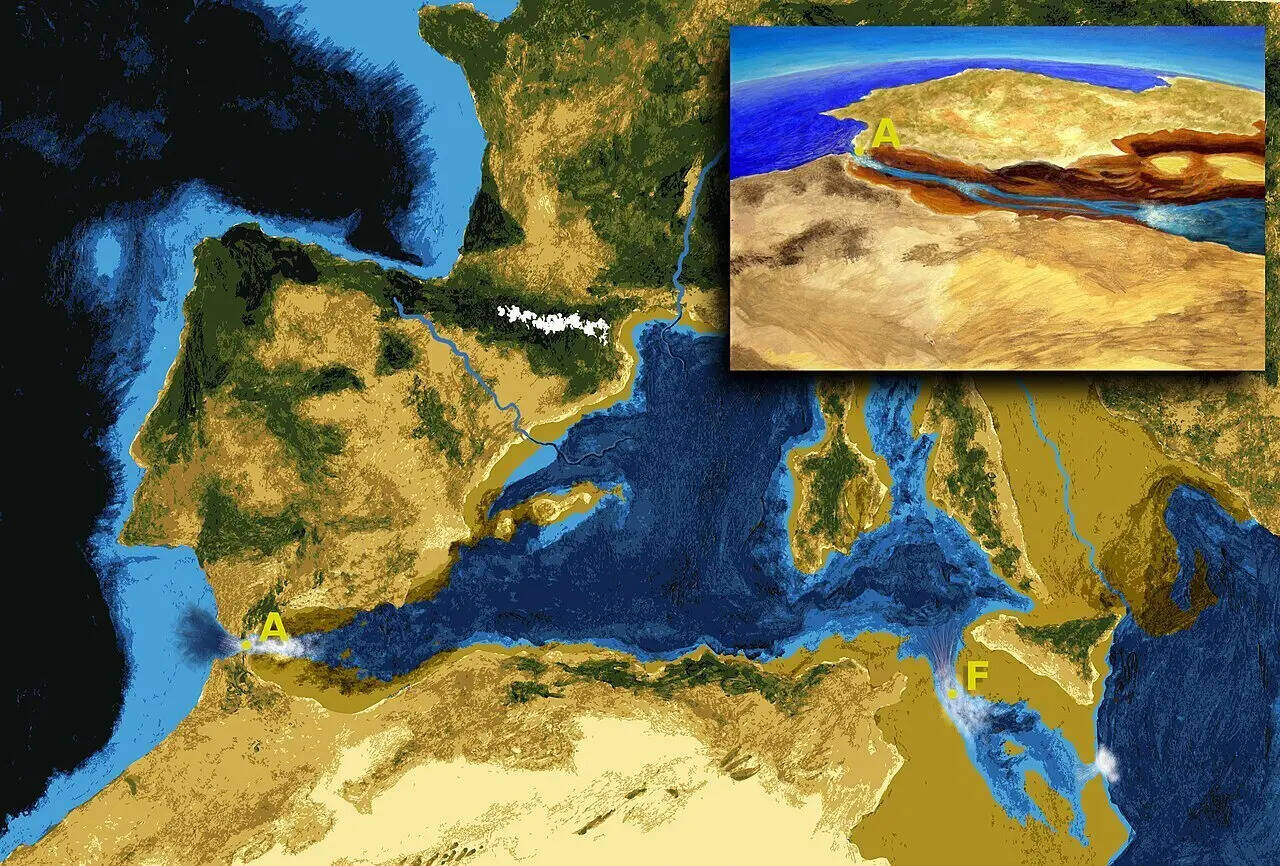
This geological event, known as the Messinian Salinity Crisis, caused the sea level to drop by two kilometers, creating deep valleys carved by rivers like the Nile and Rhone. The immense salt deposits beneath the seabed continue to influence the region’s geology today. Image credits: Wikimedia Commons
The disappearance of huge amounts of water from the basin had other effects on the geological landscape of the area. First of all, the land that was free from the burden of the huge quantity of water started rising due to isostatic rebound. In addition, the weight of subsequent sedimentation led to gradual movement of salt layers deep below the surface, resembling glacier-like movements of ice masses. This process is still influencing the geology of the region significantly.The mystery of the two-kilometre dropFor decades, experts were divided on just how much water actually vanished during this crisis. Some argued the sea remained relatively full but just became extremely salty. Others suspected a total collapse. Only recently have scientists been able to use the chemical fingerprints left in the salt to solve the mystery. The findings have confirmed that the Mediterranean did not just get salty. It essentially emptied, leaving a hole in the Earth over a mile deep.A pivotal 2024 study titled Chlorine isotopes constrain a major drawdown of the Mediterranean Sea provided the evidence needed to settle the debate. By analysing specific isotopes trapped in ancient salt crystals, researchers were able to prove that the sea level dropped by an astonishing two kilometres. This drawdown was so extreme that it turned the Mediterranean into a series of isolated, hypersaline lakes sitting far below the level of the Atlantic Ocean.Such a huge reduction compelled the big rivers on Earth to respond. The Nile and the Rhone started flowing into a huge depth due to this sudden change. They cut down huge valleys, which are today covered with sediments. It was a result of two phases: one of high salinity and another one when the water levels went down very fast. It serves as a good example of how drastically things change on our planet. The giant salt underwater is not merely an ore deposit. It symbolises the period when the Earth re-shaped itself entirely.