


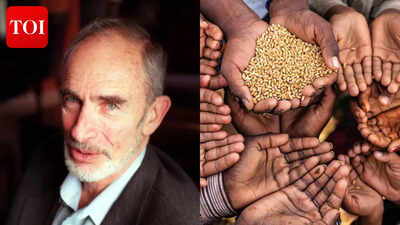
“This universe is finite, its resources, finite…if life is left unchecked, life will cease to exist. It needs correcting,” said Thanos, the Mad Titan before he snapped his fingers and killed half of all life on Earth.While movie fanatics and conspiracy theorists may have thought Marvel was hinting at something in the future, the cinematic universe’s most popular villain was actually quoting his intellectual godfather, Paul Ehrlich, almost verbatim.Paul R. Ehrlich, who recently passed away on March 13, 2026, was a popular and controversial American biologist and former Bing Professor of Population Studies at Stanford University. In 1968, Ehrlich dropped a literary grenade that defined the zeitgeist of the coming decades, not only shaping environmental movement and global policy but also the life and death of the upcoming human generations. The book was ‘The Population Bomb’ and its opening line was as subtle as a jump scare in a slasher flick: “The battle to feed all of humanity is over.” Ehrlich wrote this not because we had sufficient resources, but because he was predicting a total collapse of the world’s systems. He famously wagered that in the 1970s, hundreds of millions would starve to death, regardless of any “crash programs.”However, as he later conceded and we see today, much of his warning was hyperbole, as much of the population has doubled in 2026 and now, the bomb looks more like a dud.
The “Delhi Taxi” Epiphany
Interestingly, Ehrlich’s book originated during a “stinking hot night” in Delhi, India. Riding in a taxi, along with his wife and daughter, headed to his hotel, he claimed he understood the emotional aspect of the population explosion that night. He wrote of being “frightened” by the “hellish aspect” of people everywhere—eating, washing, begging, defecating. This, say critics of the now and then, was the foundational moment of his bias. Ehrlich did not begin the ideology by observing a system’s failure, he saw a “mob” as a biological threat. His view was that of an “overprivileged tourist” worried about the non-Western world rather than the population.
The racist horror of Paul Ehrlich
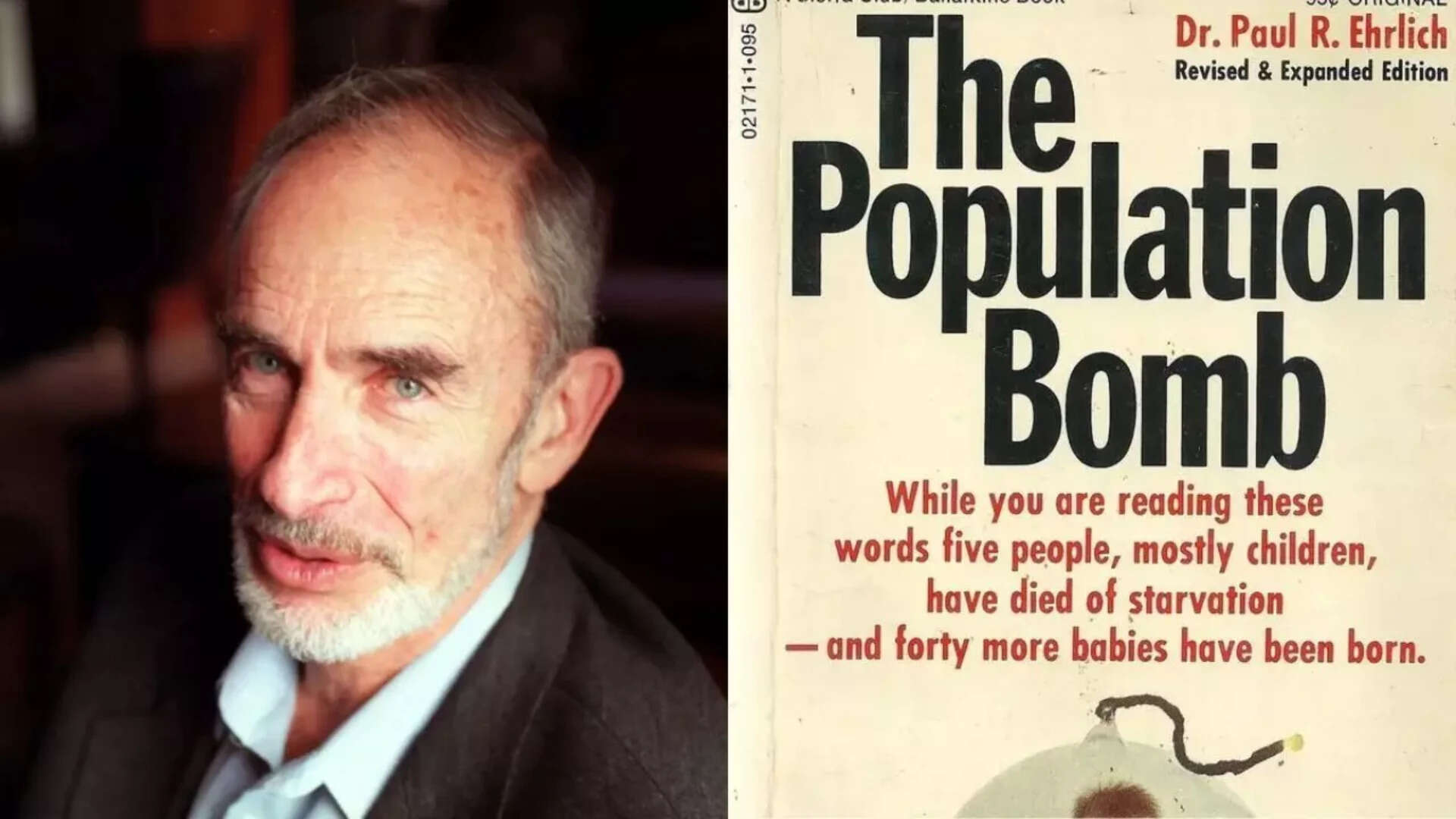
Ehrlich wasn’t able to achieve much of his aims with the book, but what he was able to do was transform a biological theory into a blockbuster horror, terrorising governments, and through them-people. The virality of the book not only gave birth to a hippie movement but also led to the rise of “Zero Population Growth” organisation, whose advocates, like their father, harboured a dark, authoritarian streak toying on the precipice of Nazi-like eugenics. While Ehrlich may have fooled the layman by mentioning the simple aspects of either decreasing birth rate or increasing death rate, in his bomb lay maps of explosion. He openly discussed:
- Compulsory birth control: He suggested adding “temporary sterilants” to water supplies or staple foods, though he admitted this was technologically difficult at the time.
- Triage aid: He quoted a policy suggested by William and Paul Paddock in their book Famine (1975) and argued for a “triage”. If a country like India couldn’t prove it was aggressively lowering its birth rate, he suggested the US should cut off food aid and let the “inevitable” famine happen.
- Biological warfare: For years, people have theorised that the COVID-19 outbreak was an attempt at population control by the world’s superpowers. Ehrlich suggested something similar, wondering about the escape of a lethal strain created for biological warfare, spreading into an overcrowded population by the modern transport systems. “It would be impossible for vaccines to be produced and distributed in time to affect the course of the epidemic in most areas,” he wrote.
- Targeting the “other”: In the entire book, Ehrlich’s problem with overpopulation, depletion of resources and environmental concerns were almost exclusively blamed on high birth rates in Africa, Asia and Latin America. This created a “Lifeboat Ethics” framework where the supreme, wealthy, white West was responsible for pushing the “over-reproducing” Global South off the side to keep the boat afloat.
The population war
Ehrlich’s writing, though not realised, was enough to create a panic in the underdeveloped nations, prompting a swift and panicking response from the governments of numerous nations. The rhetoric provided intellectual cover for horrific human rights abuses. In India, the Indira Gandhi government launched a mass sterilisation campaign at the height of ‘The Emergency’ in 1976, during which more than 8 million men were forced to undergo a vasectomy. Ehrlich, at one point, recommended compulsory sterilization in India, calling such a radical approach “coercion in a good cause.” He even advocated supplying American helicopters and doctors for the proposed program.In 1979, China launched a One-Child Policy restricting most urban couples to a single child in order to curb population growth. This led to the country tackling a vast ageing population, gender imbalance and shrinking workforce in the later years.
Thanos and the Ghost of Malthus

Ehrlich might have been Thanos’ godfather, but his own teacher was the ‘Malthusian’ logic (named after Thomas Malthus, an economist, who first proposed these ideas in 1798). The writings of Malthus and then Ehrlich inspired a genre of pop culture dystopias that further extended horror into imaginable reality.
Soylent Green (1973): Directly inspired by the overpopulation fears of the Ehrlich era, the movie suggested the “solution” to famine and hunger was soylent green, food made from recycled human bodies.
- Inferno (2016): Where the antagonist released a virus to thin the herd for the “greater good” of the planet.
- Utopia (2020): A chilling look at a shadow organisation attempting to sterilise the world to prevent ecological collapse.
Why the bomb never exploded

So, why aren’t we all eating the soylent green, while having had a somewhat inferno moment in our lives already? Ehrlich’s theory boiled down to one big flaw: human ingenuity.
The Green Revolution
While there was a man who was working on blasting the bomb, there was another focused on disarming it. Norman Borlaug, an American agriculturalist was working to develop high-yield, disease-resistant crops. Known as the father of the Green Revolution, his work allowed food production to grow exponentially faster than the population. In India particularly, it transformed a food-deficient nation into a self-sufficient producer, reducing hunger and raising farmer incomes for years to come.
The Simon-Ehrlich bet
In 1980, economist Julian Simon challenged Ehrlich to a $1000 bet. Simon argued that Ehrlich and Malthus’ works were based on theoretical calculations and the real-world data told another story. He bet that the prices of five raw materials (copper, chromium, nickel, tin, and tungsten) would decrease over a decade, despite population growth. Ehrlich, certain that scarcity would drive prices up, accepted. Ehrlich, whom Simon called a ‘false prophet’ lost the bet as the prices of all five metals dropped by 1990. In October of that year, Simon received a check from Ehrlich, with no note.
Demographic Transition Model
Ehrlich assumed people would breed like fruit flies until they hit a resource wall, after which, they would die of starvation. However, he didn’t account for the Demographic Transition Model. As countries became wealthier, education was dispersed, the quality of life increased and women gained access to the workforce, the birth rates plummeted naturally. So much so, that today most of the countries in the world are actually facing a “population bust” where Japan, Italy, South Korea and even America are struggling with birth rates far below replacement levels.
Is Ehrlich still relevant?
Ehrlich didn’t start out as the prophet of doom. His area of study included butterflies, and many believe that it was the trip to Delhi that inspired his controversial book. He believed that the poor were so because of the high number of children they bred and not because of an unjust system of distribution of resources. The Population Bomb, today serves as a cautionary tale of scientific alarmism rather than a prediction that came true. It is an example of how data can be used as a veneer to push policies that are rooted in bias and racial discrimination. Reminding us once again, that when someone says the “solution” to a problem is to decrease the number of a certain people, it’s not science or biology- it’s eugenics.