


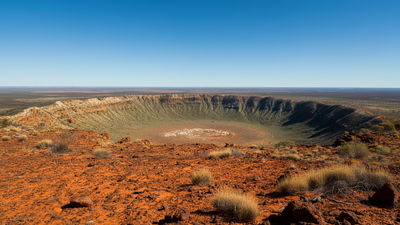
Scientists have identified the Yarrabubba impact crater in Western Australia as the Earth’s oldest, dating back 2.229 billion years.
Were you to visit the Yarrabubba station in the remote regions of Western Australia, you would not notice a huge open wound in the ground. The area does not feature dramatic rock formations like those that are seen at the impact craters found in Arizona. You would rather find yourself surrounded by a flat and dusty terrain consisting of red soil and rock. Don’t be fooled by what meets your eyes, though – there is more than what meets the eye here. The area contains the oldest known impact crater on Earth.During billions of years of the Earth’s life, it has been pretty good at eliminating its own history. Continual collisions between the continents, coupled with constant activity from wind and rain, have resulted in most of the ancient history of catastrophes experienced by the planet being destroyed by the same. Yet, the site called Yarrabubba proves that sometimes Earth failed to erase its history, and humans get an opportunity to look back into the era when even the dinosaurs had not been born.How an impact crater is discoveredSince there is no visible rim anymore, having been worn down after millions of years, the responsibility for finding evidence lies with the scientist. According to the scientific article in Nature Communications, the scientists made use of innovative dating methods in order to determine the age of tiny crystals such as zircon and monazite. The crystals mentioned served as a microscopic clock “reset” by the shock waves created during the impact event.This finding was astounding. The group managed to establish that the impact took place around 2.229 billion years ago. As such, Yarrabubba becomes the oldest known impact structure on the planet, having dethroned a previous candidate from South Africa by a few hundred million years. But more than that, it is a major landmark that helps us understand what the Earth was like in the Paleoproterozoic period, which marks an early stage in Earth’s development.
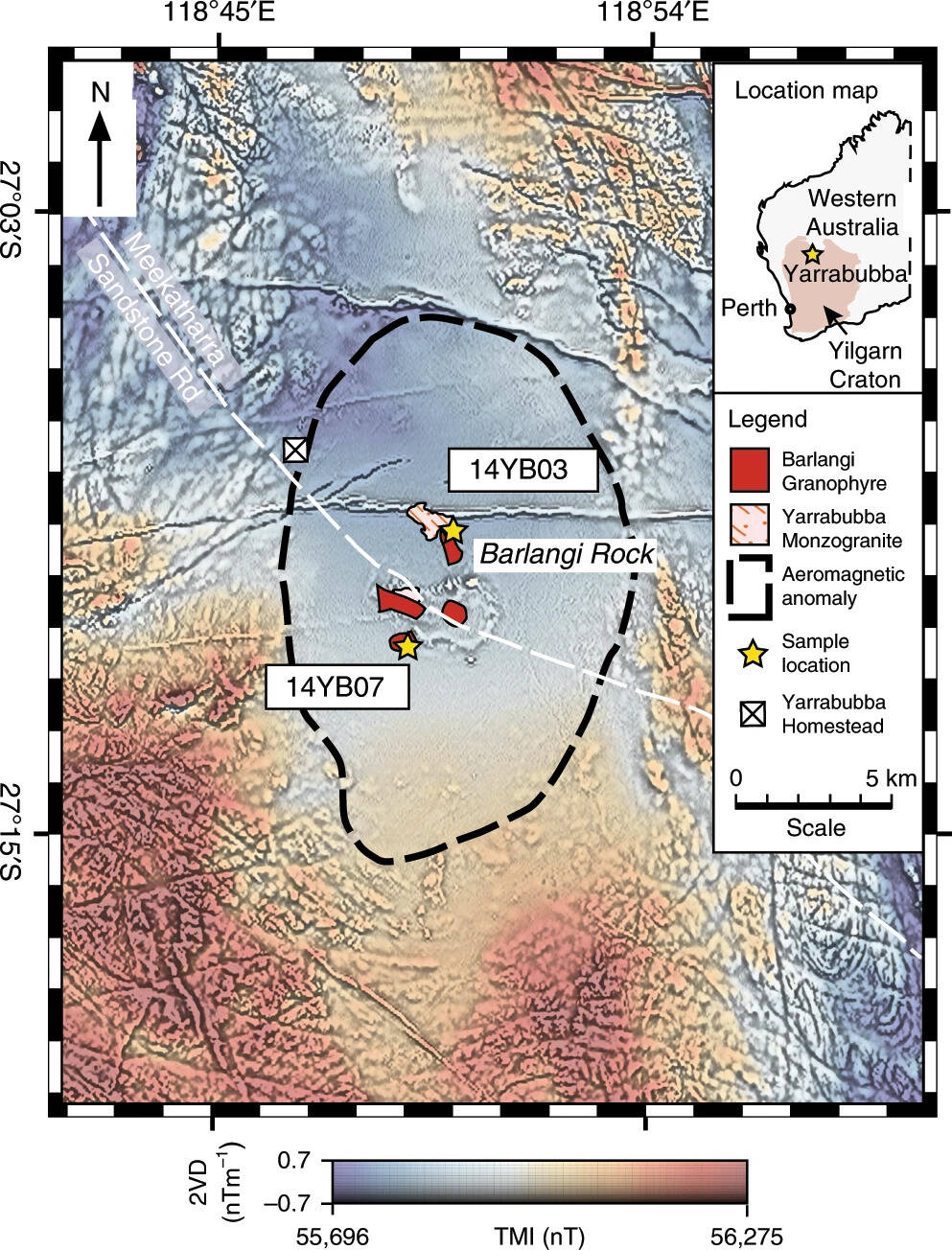
This ancient collision, occurring when Earth was covered in ice, may have released massive amounts of water vapour, potentially ending a global ice age. The discovery offers crucial insights into early Earth’s climate history. Image Credits: Precise radiometric age establishes Yarrabubba, Western Australia, as Earth’s oldest recognised meteorite impact structure study Fig 1
A rewriting of ancient Earth’s historyThe findings completely alter our perception of the Earth’s history. As indicated by the World’s oldest impact crater, rewriting Earth’s ancient history, from Curtin University, the timing is especially interesting since it corresponds with the end of a long period in Earth’s history marked by global glaciations. In other words, when this event happened, the Earth was effectively a “snowball” covered in large ice sheets.Scientists at Curtin University modelled what happens when a massive asteroid slams into a landscape dominated by ice. They found that such an event would have instantly vaporised half a trillion tons of water vapour into the atmosphere. Since water vapour is a potent greenhouse gas, this sudden atmospheric injection may have served as a tipping point, helping to warm the planet and bring an end to the ancient ice age. While much of the crater’s physical bowl has been lost to time, the chemical signatures left in the dust are finally allowing us to piece together how a single bad day for the Earth might have changed its climate forever.In essence, Yarrabubba shows us that the most important information about Earth’s past can always be found within its most damaged parts. While meteor collisions may seem to be nothing more than disasters, Yarrabubba shows that they could very well act as the “reset button” which alters the climate and thaws out the Earth. Even if the impact itself has eroded over time, the minerals left behind are giving us insight into a collision which has rewritten our history.