



Nagaland greets you with hills that fold into mist, villages that keep time with the seasons, and a hospitality that feels like a quiet promise: stay awhile, and you will be seen. Beyond its festivals and woven shawls, one of the state’s quieter wonders is a culture of trust – so strong in some villages that public goods run on an honor system. In places like Kigwema and Khonoma, libraries and shops operate without locks, cashiers, or formal oversight. The result is a gentle reminder that community can sustain curiosity and generosity when people choose to believe in one another.
A library that trusts you back
Kigwema, an Angami Naga village steeped in tradition, is home to a community library that breaks the usual rules of public spaces. Shelves filled with novels, reference books, and children’s titles stand open to anyone who wants them. There’s no front desk, no sign-in sheet, no librarian watching over the stacks—only an invitation: take a book, enjoy it, and return it when you’re done. The collection grew out of a simple idea: make reading accessible to everyone, from schoolchildren to elders, and let trust be the lending policy.
How trust became a habit
The library began as a grassroots effort by local residents who wanted to make reading a living part of village life. Neighbours donated volumes, families added whatever they could spare, and visitors contributed too. Over time those small acts accumulated into a surprisingly robust collection—hundreds of books available to anyone who asks for them simply by walking in. That openness encourages casual browsing, quiet study, and intergenerational conversations that libraries behind glass seldom spark.
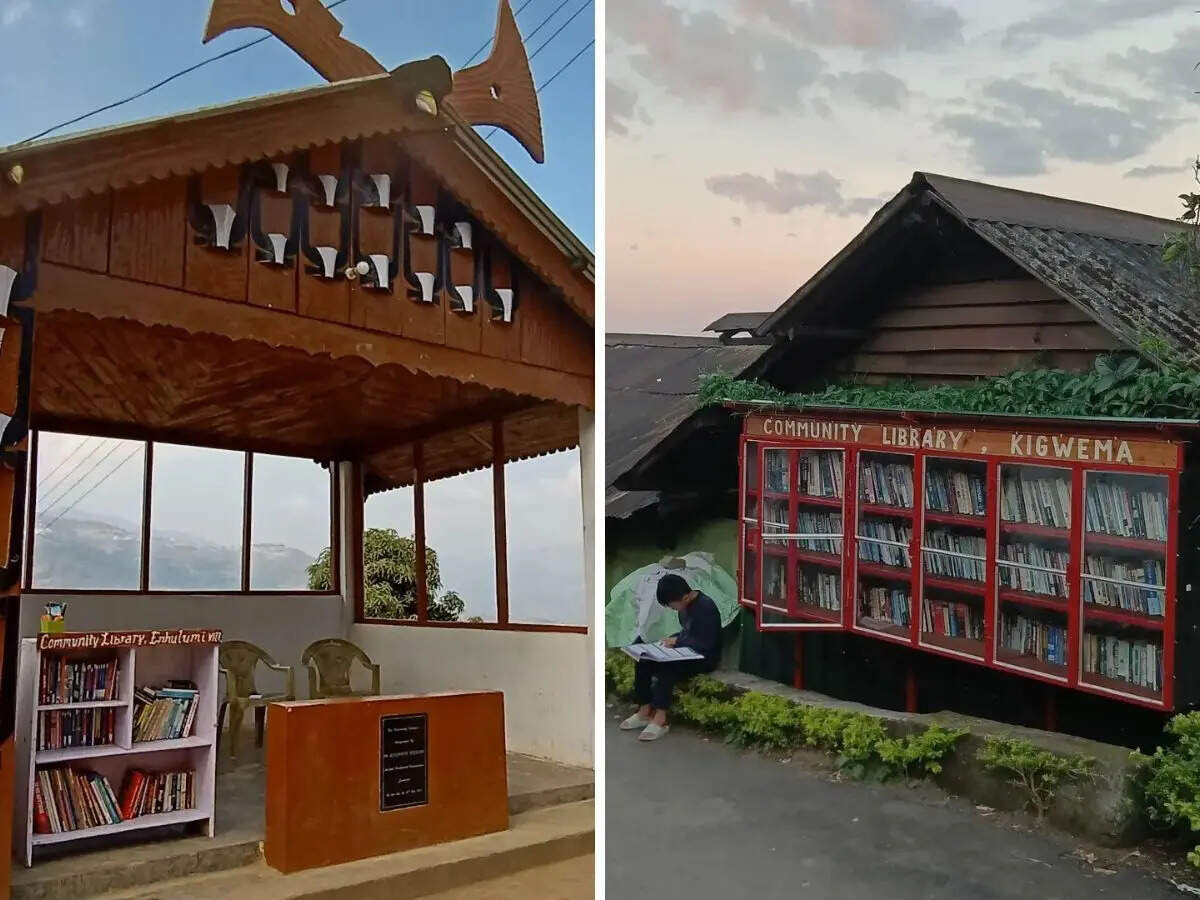
There are also self-payment shops without any vendors in Nagaland. (Image – communitylibrary_kigwema: Instagram)
The honour-system market: small acts, big meaning
Kigwema isn’t alone. Nearby villages have experimented with the same principle in shops and stalls. In some hamlets, villagers place goods—produce, packaged items, sometimes even handcrafted goods—on display with a cash box nearby. Customers take what they need and drop the payment in; there’s no vendor tallying sales, no one standing guard. This informal economy depends on mutual respect: people pay what’s fair, and the system keeps working because everyone treats it as their responsibility to the community.
Why this matters beyond the novelty
At first glance, an unlocked library or a self-serve market feels like a quaint curiosity for travelers. Look closer, though, and you see why it matters. These practices cultivate social capital: the trust, reciprocity, and shared norms that make cooperation possible. In places where such systems work, people report stronger neighbourly ties, more civic participation, and a sense of safety that comes from mutual accountability. It’s a practical answer to the question: how do communities keep common goods available and cared for without heavy bureaucracy?
Lessons for cities and communities
The Kigwema story offers a small blueprint for rebuilding civic life elsewhere. Start with low-cost, high-trust experiments: a communal bookshelf in a neighbourhood park, a “take-and-pay” stall at a farmers’ market, or an unlocked lending shelf at a school. These initiatives won’t replace institutions, but they can nudge people toward behaving more responsibly toward shared resources. The key ingredient is reciprocity—people participate because they believe others will too.
A quiet source of pride
For locals, these trust-based projects are more than tourist anecdotes; they are expressions of identity. They reflect values of mutual care, stewardship, and a willingness to let goodwill guide daily life. For visitors, they are a gentle invitation to slow down and remember that community can be handcrafted—book by book, loaf by loaf—when people choose to trust one another.If you’re planning a trip to Nagaland, allocate time to visit a village library or a self-serve stall. Bring a book to donate, or a few coins to drop in the box. You’ll leave with more than a photo: you’ll carry a small, lived example of how trust can turn ordinary places into shared treasures.