


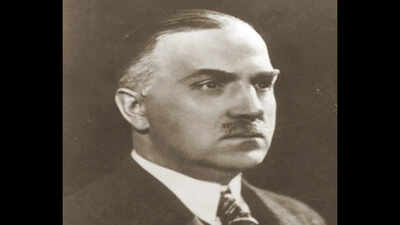
Laboratory mistakes often lead to something extremely unusual. In fact, many groundbreaking scientific findings have come from minor mishaps. For instance, according to some accounts, Polish chemist Jan Czochralski accidentally dipped his pen into molten metal rather than ink in a lab in 1916. As he withdrew the pen, he found that a fine metallic line was being drawn behind it. What seemed insignificant at the time was a revelation in hindsight. It was a crystal lattice structure.According to the profile of the Jan Czochralski Award by Arizona State University, this discovery led to the development of the crystal-pulling technique for producing silicon and germanium crystals used in electronic devices. This anecdote has endured for over a century due to its immense impact on the development of semiconductor components, integrated circuits, and computing technology.Why single crystals are so crucialThe significance of this breakthrough can be understood in terms of crystal purity. The internal structure of electronic devices should be highly ordered for maximum efficiency. A single crystal is capable of providing this order.This phenomenon makes it possible to conduct electricity in a predictable way through semiconductors, such as silicon. The PubMed review of Czochralski’s involvement in the “gigabit era” highlights that 95% of silicon single crystals globally are produced by the process he discovered.The percentage is significant since silicon wafers serve as the basis of current computer chips. Cell phones, computers, health care devices, satellite systems, and telecommunications equipment use silicon semiconductor wafers, which are made of highly pure crystal structures. If reliable crystal growth cannot be achieved, then the electronics industry will have trouble making enough chips to support current technological needs.From a small thread to silicon wafersCzochralski’s initial observation grew into an industrialised process that involves dipping a seed crystal into melted silicon and raising it while rotating it. The rising seed crystal causes atoms to form a seamless crystal structure.Current research continues to identify the Czochralski method as the primary technique for creating large silicon single crystals. The 2024 PMC technical publication identifies it as the “primary route” for creating large-sized silicon crystals for semiconductor manufacturing. It proved crucial for electronics, since a larger crystal size allows one to make more wafers out from the same ingot.In that case, the invention cannot be considered purely scientific. Instead, it turned out to be a manufacturing technique that facilitated the industrial production of electronics. The discovery had an important impact on the development of the semiconductor eraFor the semiconductor industry, it was crucial to have pure materials that would demonstrate stable behaviour. Electronic devices in their early stages had low reliability and performance because of defects in the material. Czochralski helped address the problem by providing a way of obtaining almost defect-free crystals.Despite advances made in temperature control and technology, the principle behind the discovery remained the same. Namely, it offered a technique for drawing a crystal from the molten state.
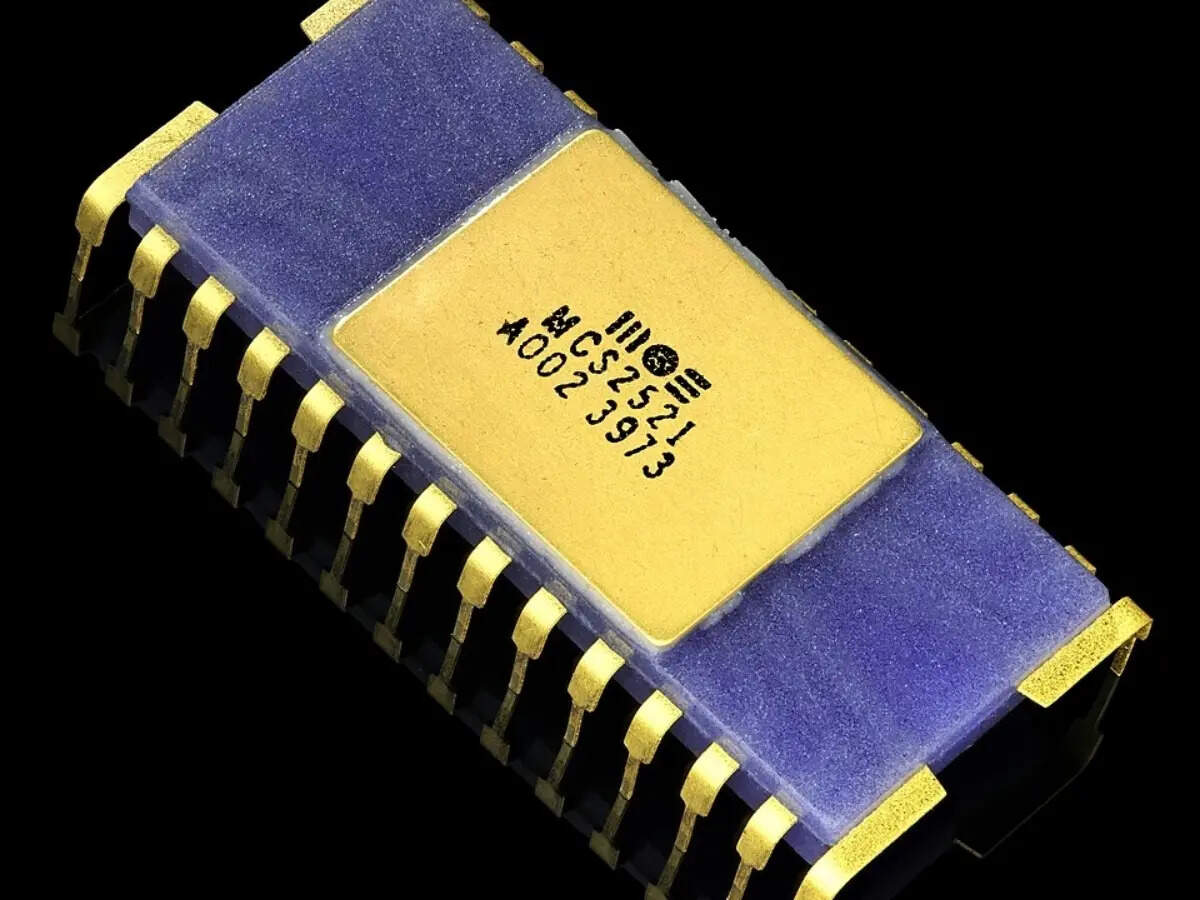
How an unexpected crystal thread helped build the microchip age. Image credit – Wikimedia
Reasons why the Czochralski technique is still relevantThe significance of this process can hardly be underestimated. The creation of integrated circuits required highly homogenous silicon, while the manufacturing of modern microchips would not be possible without wafers obtained using crystal growth technology based on the Czochralski technique. The process did not produce a microchip. However, it played a significant role in making mass production possible. A lot of people would have disregarded the metallic thread or considered it to be some sort of residue. Czochralski focused on it.According to Arizona State University, this method remains highly relevant as the crystal growth technique that led to the current electronic materials. This factor endows the story with an added level of historical significance. Some inventions become outdated with technological advancements. However, this method never did. It became even more relevant.The modern semiconductor industry is globally oriented but still rooted in a discovery that happened way back in 1916.