


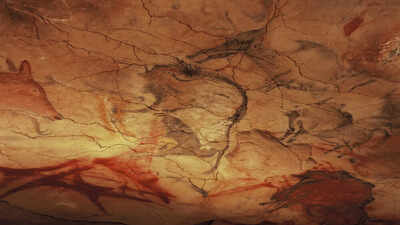
At high elevations, in the limestone mountains near Santillana del Mar, the land opens up as a diagonal strip of grassland and broken rock formations. On an ordinary day in 1868, a man named Modesto Cubillas, who was a hunter from the region, walked through these surroundings, likely paying less attention to the historical significance hidden under the surface of the ground than he did to his own hunt. While moving about in the bushes, he noticed a small opening on the ground; it was not even an impressive one, but just a small crevice concealed by the side of a slope.Cubillas took notice of the area and began exploring the dark void, finding out that it led to an underground maze of chambers. The cave remained a curiosity in the locale for nearly a decade, being no more than a mysterious hole in the ground known to few. Then, in 1879, the truth behind the cave revealed itself. Marcelino Sanz de Sautuola, an amateur archaeologist, brought his daughter, María, to investigate the cave. While Sanz de Sautuola rummaged through the cave floor searching for flints, María lifted her eyes toward the ceiling and noticed a herd of bison galloping along it.Ceiling paintings from prehistoric timesThe images María discovered were not merely primitive drawings; rather, they were highly developed artistic masterpieces with shading, proper perspective, and accurate depictions of animal anatomy. The description by UNESCO of the Altamira Cave as a World Heritage site states that the cave paintings are considered the culmination of Upper Palaeolithic artistic creativity. The artist took advantage of the natural contour of the cave ceiling to give life-like dimensionality to the images of the bison.It is interesting that for a long while, since the discovery, many academics have cast doubts regarding the genuineness of the paintings. This was based on their belief that it was impossible for hunter-gatherers of 14,000-20,000 years ago to have sufficient artistic skills to create such an incredible work of art. However, according to the research by the Bradshaw Foundation, evidence regarding its genuineness eventually became unequivocal.
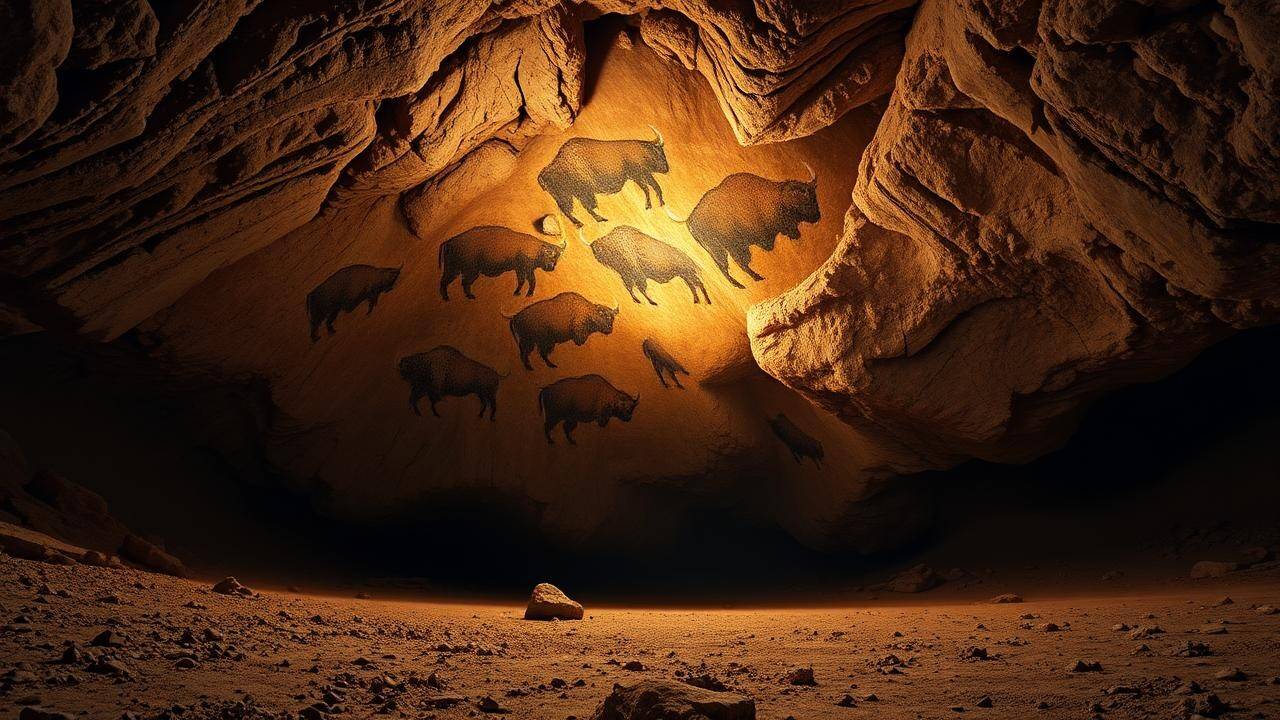
Preserved by a natural rockfall, the cave offers a glimpse into humanity’s ancient artistic expression, reminding us that history often lies hidden in plain sight. (Representative Image)
The preservation of the pictures was due to a kind of geological luck. The cave’s entrance was long ago sealed by rocks falling at its entrance, providing an enclosed space with constant humidity and temperature. This natural sealing prevented the painting materials, which were made out of charcoal and ochre, from being washed off. What Cubillas opened back in 1868 was actually a seal that preserved the paintings from the era of the Ice Age.Hunter’s unexpected inheritanceA chance day of hunting led to unexpected discoveries, opening humanity’s eyes to itself through the ages. The Cave of Altamira revealed to the world that art was not something created in the process of civilisation but something essential to human nature. The bison hunters did not live solely for their daily survival but used the medium of painting to communicate and even conduct rituals.In today’s times, the actual cave is preserved with much diligence to protect it from the damage that could be caused by the warm breath of its visitors. However, a modern reconstruction of the cave, the Neocave, allows humans to experience the awe that María once felt in 1879. This site will remain forever an important symbol for humanity, where ancient history is made alive.Altamira is a story that demonstrates how some of the most extraordinary discoveries can spring from such mundane actions as taking a close look at things. It took an eagle-eyed hunter to discover the cave, while it took an inquisitive child to see the art there. This way, they brought into light the art that had been buried in the past for twenty thousand years. It is a powerful message: history can be right underneath our noses, hiding in plain view under layers of brush and time.