


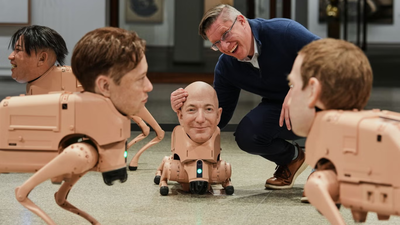
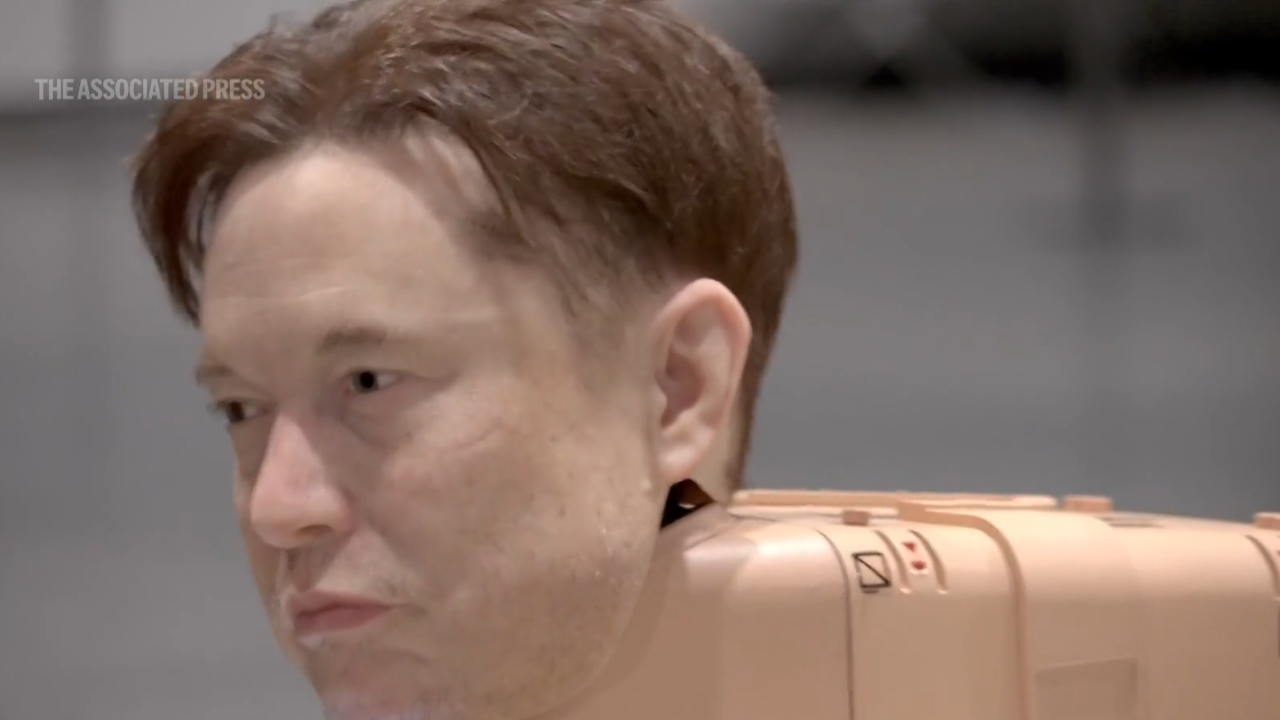
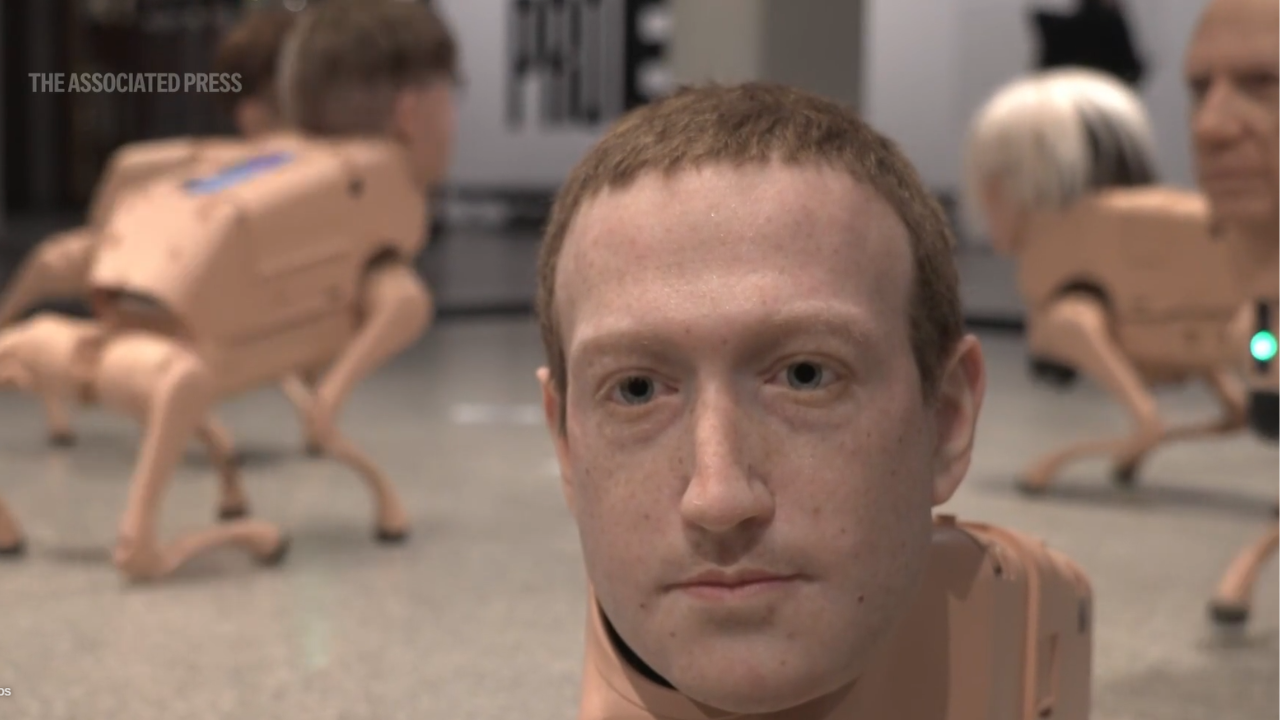
At Berlin’s Neue Nationalgalerie, visitors are greeted by robotic dogs fitted with hyper-realistic silicone heads resembling Elon Musk, Jeff Bezos and Mark Zuckerberg. These machines move through the gallery, observing their surroundings before producing AI-generated interpretations of what they capture. Created by digital artist Mike Winkelmann, the installation titled Regular Animals transforms familiar tech figures into mechanical observers and invites visitors to reflect on how algorithms and digital systems shape modern perception.
How billionaire-faced robot dogs of Elon Musk, Jeff Bezos and Mark Zuckerberg recreate reality
Each robotic unit operates as a self-contained system combining mobility, image capture and generative AI processing. Built on quadruped platforms, the dogs move within the gallery while scanning their environment through embedded cameras.Captured visuals are processed in real time using AI models that reinterpret scenes in distinct styles. A dog modelled on Pablo Picasso renders fragmented, Cubist compositions, while one inspired by Andy Warhol produces bold pop-art imagery. In contrast, dogs bearing the likeness of tech figures represent data-driven filtering rather than artistic interpretation, pointing to how digital systems reshape information.
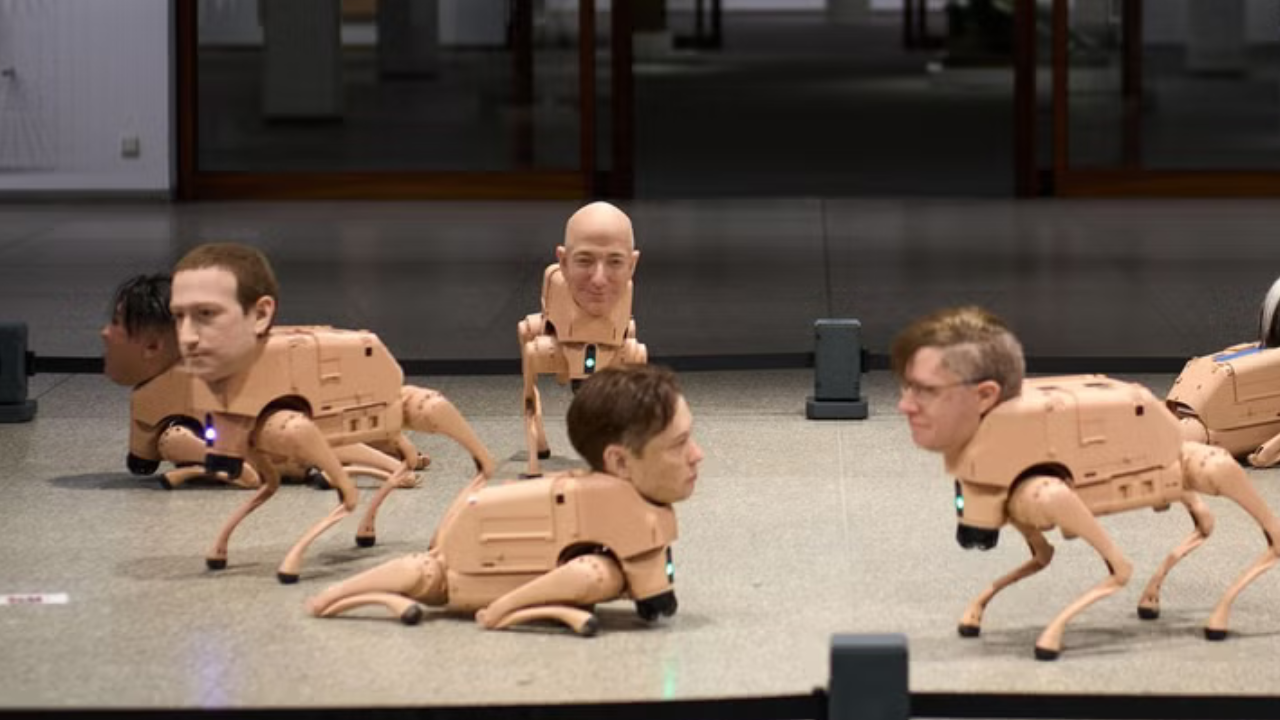
The resulting images are printed instantly and deposited within the space. Some prints include QR codes that link to blockchain-backed assets, extending the artwork into a digital layer where visitors can access or collect parts of the project.The installation examines how influence over perception has shifted in the digital era. Artists once shaped cultural understanding through visual language. Today, platforms controlled by figures such as Elon Musk and Mark Zuckerberg play a central role in determining what people see online.These platforms rely on recommendation systems that curate content for billions of users. Visibility, reach and engagement are governed by algorithms that operate with limited transparency. Small adjustments to these systems can significantly alter public discourse, affecting news exposure, cultural trends and social narratives.Unlike traditional institutions, these systems can be modified instantly without formal approval processes. By presenting this influence in physical form, the installation makes an abstract system visible and easier to question.
Why the ‘absurd’ element matters
One of the most discussed aspects of the installation is the way the robots produce printed images in a deliberately exaggerated manner. This design choice serves as a conceptual tool rather than a simple visual gimmick.In digital environments, content is generated and distributed continuously through automated systems. The process remains largely invisible, encouraging passive consumption. The installation brings that hidden mechanism into view, turning it into something tangible and difficult to ignore.This approach highlights how information is processed, filtered and delivered at scale. By presenting the process in a physical and exaggerated form, the work encourages viewers to think more critically about the origins and reliability of the content they encounter.
From NFT pioneer to museum provocateur
Mike Winkelmann gained global recognition in 2021 when his digital collage Everydays: The First 5000 Days sold for over $69 million at Christie’s. The sale marked a turning point in the acceptance of digital art and introduced blockchain verification into mainstream art markets.With Regular Animals, Beeple expands his practice beyond static digital works. The project combines robotics, artificial intelligence and blockchain elements into a unified system that generates and distributes content in real time.This shift reflects broader changes in the creative landscape, where artists increasingly engage with technological infrastructures as part of their work. The installation demonstrates how digital tools are no longer just mediums but active components in shaping artistic output.
A reflection of the AI moment
The exhibition arrives at a time when artificial intelligence is reshaping communication, creativity and information flow. Generative AI tools now produce text, images and media at scale, raising questions about authorship, control and authenticity.Institutions such as the Neue Nationalgalerie are engaging with these developments by presenting works that explore their impact. Regular Animals places AI within a physical context, allowing visitors to observe how machine-driven interpretation operates in real time.The installation also reflects the merging of physical and digital environments. The robotic forms exist in the gallery, while their outputs extend into digital networks and blockchain systems. This dual presence mirrors a broader cultural shift in which physical experience and digital representation are increasingly interconnected.The work leaves visitors with an open question. As algorithms play a growing role in shaping perception, the extent of human control over how reality is constructed becomes less certain.