


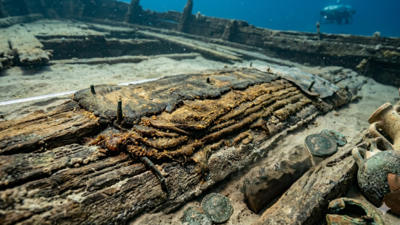
The Roman merchant ship had been resting for over two millennia under the clear waters of the Adriatic Sea, off the coast of Ilovik. The ship was buried in the sands and remained undiscovered until a group of underwater archaeologists and divers started to unveil its secrets. It turned out that this ship was not only a grave for pieces of wood and broken pottery but a brilliant example of ancient craftsmanship and durability. This particular ship dates back to the 2nd century BC and provides access to the lives of seafarers who braved the seas armed only with timber, tar, and determination.The wreckage is certainly not perfect, as the vessel itself looked as though it had undergone a lot of patching and reinforcing over its many years at sea. The craft was fixed, strengthened, and glued, thus proving the resourcefulness of the people who sailed it and managed to keep sailing despite all difficulties. This rare example of “hidden repairs” has allowed scientists to get an idea about how flexible Roman sailors were when it came to keeping the ship safe.Sticking to the ancient ways of sea travelWhen the team started analysing the hull, they noticed unusual dark coatings on the wooden planks and fabric that sealed the gaps between them. It appears that Roman sailors used some kind of waterproof glue that would help maintain the watertightness of the vessels. This is confirmed in a paper published in Frontiers in Materials.Molecular evidence suggested that the resin was sourced from several different locations throughout the Mediterranean region, indicating that there was an elaborate system of supply routes. It seems like the workings of a very particular “marine glue,” one that had been imported for the sole purpose of keeping the Roman merchant fleet afloat. The old repairmen would heat up the resin to make it flow like honey, apply it to cloth made from either linen or wool, then press the cloth against the cracks of the hull.
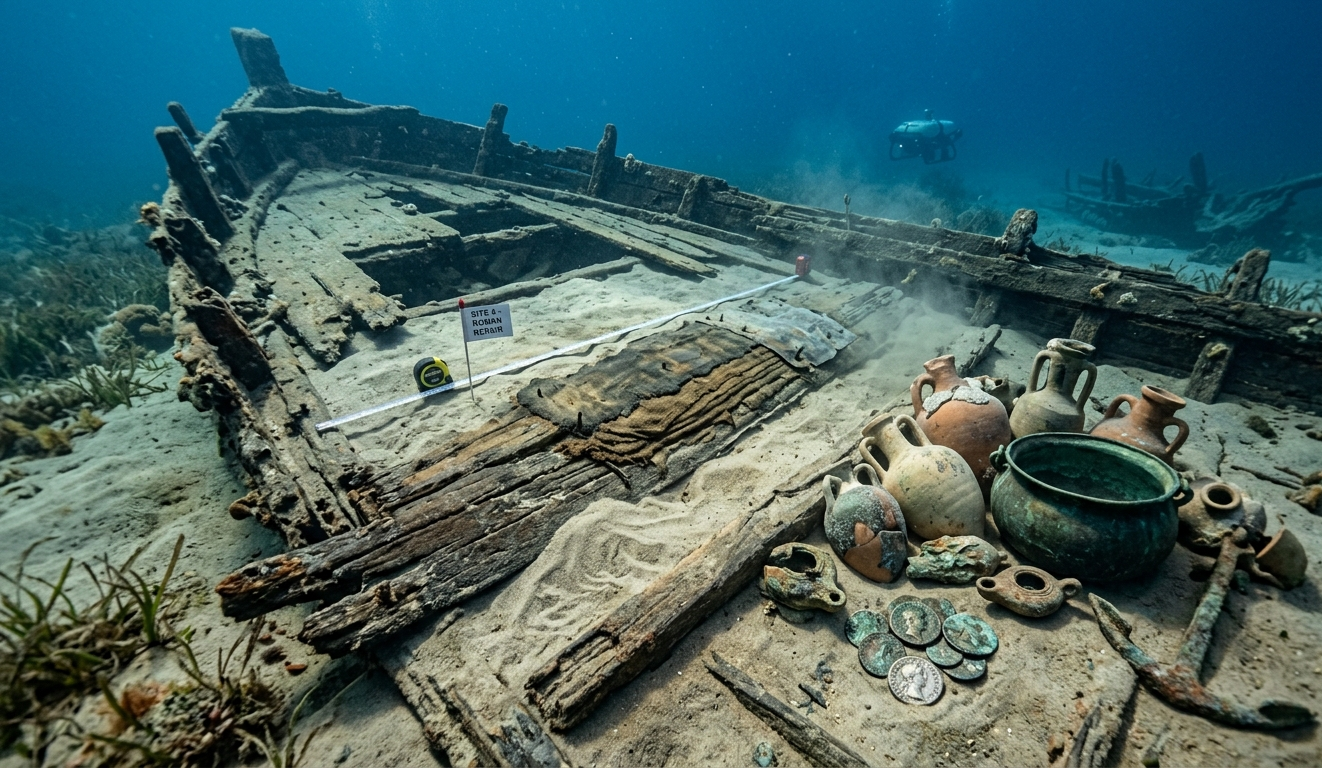
Pollen analysis within the sealant provides a ‘biological map’ of the ship’s extensive journeys, highlighting the vital role of such vessels in Roman trade. Image Credit: Google Gemini
Furthermore, according to the study, there had been several emergency repair works done to the vessel. The ship had several layers of different types of resin covering the wood, indicating that the sailors utilised whatever material was available during their next stop. This is a human aspect. Technology advances, but the fear of water in the boat remains eternal.After the journey of the ancient pollenAside from the resins, there was an additional biological marker that was hidden within the waterproof sealants of the ship. Pollen particles were found encased in the adhesive mixture, where they remained undisturbed for over 2,200 years. According to the report published by Discover Magazine, the pollen served as a biological map for the last few years of the ship’s life.From the plants, it is evident that the journey continued for some time, going south to the Mediterranean and then north towards the coastline of Croatia. From pollen analysis, it is apparent that there were not one but many repair sites because of the long journey done through different environments. This boat can be regarded as a diligent workhorse for the Roman Republic since it transported many cargoes for vast distances.The extensive Roman sea transportation system becomes apparent when taking into account not only their trade in cargo but also in shipbuilding. Amphorae, usually filled with essential commodities like wine and olive oil, were the usual load of the Roman cargo ships. It is easy to see from the great efforts made by the owner of the cargo ship to repair it how valuable such ships were, since they were the basis of all commerce, and destruction could bring significant losses.In modern times, traces of the ancient ship wrecked near Paržine on the island of Ilovik continue inspiring many scientists engaged in sea exploration. History and civilisation are not always expressed through statues and coins, but sometimes hidden in the resin and pollen found in the wooden hull of the ancient vessel.