


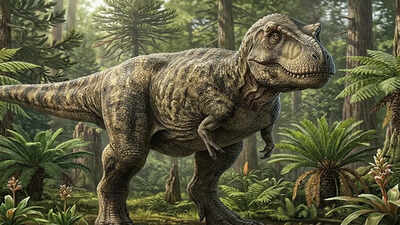
For many years, the depiction of Tyrannosaurus rex with exposed teeth, even when its mouth is shut, has dominated literature and cinema. This assumption has been used to create models for display purposes. Nevertheless, recent evidence shows that this perception might not be accurate.According to an article published in the journal Science, T. rex and other big theropods had lips. Therefore, they had no exposed teeth, just like today’s animals. The study was conducted by a group of researchers headed by palaeontologist Thomas Cullen. The results refute the long-held scientific and public views on theropods’ appearance.Reasons why exposed teeth might not be accurateTheropods had large teeth. As such, they were likened to crocodiles, which had visible teeth when they had their mouths shut.There was one major drawback in this comparison. First, theropods’ teeth were not adapted to be constantly exposed. Unlike crocodiles’ teeth, those of theropods had thin enamel, meaning they would get dehydrated if exposed.The researchers explained in the study that constant exposure would result in harmful tooth desiccation and attrition. This means the theropods must have had some method of protecting their teeth.Evidence from extinct reptiles and modern animalsIn order to support their hypothesis, the scientists compared their data about theropods with that of living lizards. The connection between skull and tooth size was considered.Theropods appeared to be similar to lizards that use their lips to completely cover their teeth. Moreover, scientists have examined microstructures of theropod teeth that survived in fossilised forms. Based on their findings, theropod teeth did not show signs of wear that could be expected in the teeth with constant exposure. This means that theropod teeth were likely covered with soft tissue.
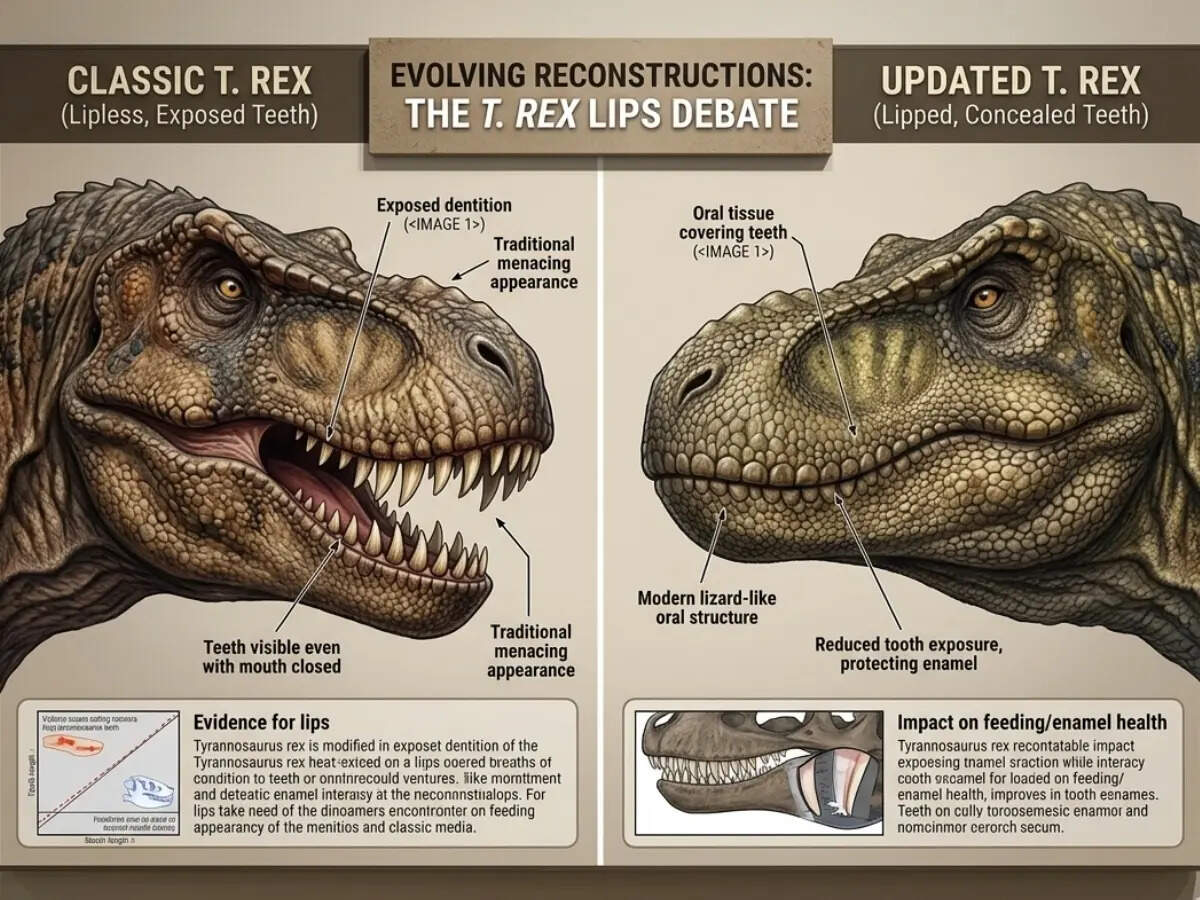
Why T. rex probably didn’t show its teeth like in movies? Image credit – Gemini
Teeth structure of theropodsAnother clue about lips lies in the tooth structure of theropods. They had teeth with serrations, and this meant that they would need to protect them in order to keep them sharp.In addition, there was little to suggest significant wear on tyrannosaur teeth due to external abrasion. This further confirms that these teeth were moist and protected within the oral cavity.The modern-day reptiles can offer valuable insights into such an issue. Komodo dragons, for example, have scaly lips protecting the mouth and contributing to tooth health. It is possible that theropods had something like this as well.What the discovery means for palaeontologyIf true, the presence of lips in prehistoric creatures can redefine our understanding of dinosaurs completely. The discovery could significantly impact various aspects of dinosaur anatomy, including diet and moisture regulation.The discovery can contribute to biomechanical research, too. For example, covered teeth could improve the distribution of forces in the jaw while biting and reduce the risk of damage.Apart from its scientific importance, this discovery could influence popular culture as well. Many iconic representations of dinosaurs will likely require rethinking based on new knowledge.Paleoartist Mark Witton is already using this information to draw new representations of T. rex. His depictions of these creatures show a completely new look.New perspective on the terrifying image of the animalAt first sight, a T. rex that is covered in lips might appear as a less frightening creature. Still, as Cullen and his colleagues claim, there is no reason why such a dinosaur will look less intimidating.Quite on the contrary, it may be considered even more frightening due to the fact that a tooth-protective animal is likely to survive much longer.Thus, it becomes obvious that science progresses in terms of the creatures which are already familiar to researchers. In other words, an evolution of scientific knowledge is possible even when dealing with T. rex.It should be added that soft tissues that covered animals’ heads, such as lips, were unlikely to be preserved as fossils. Thus, they have become a challenge for palaeontologists.New insight into the ancient worldThe results obtained by the group of researchers indicate that the image of T. rex is likely to be reconsidered once again. Namely, instead of crocodile-like animals with visible fangs, scientists may now imagine huge reptiles which are similar to crocodiles but have covered teeth.Therefore, this small step forward in terms of studying dinosaur morphology may prove highly significant.