


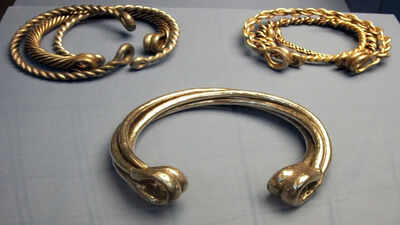
The mundane routine of agricultural tasks in Snettisham, Norfolk, quickly gave way to an unexpected episode of serendipity. The plough blade came across some stubborn resistance, and its rider jumped off to find out what was causing it. He found a twisted piece of metal, excavated from beneath the soil. In that very moment, he had no idea that the chunk of metal was the first of many items which would eventually make up Europe’s greatest Iron Age treasure trove. What he was holding was not a mere coin or a trinket lost through time; it was a clue to a cache of gold, silver, and electrum which had been lying undiscovered for over two thousand years.The number of pieces kept increasing, leading to a collection of over 175 torcs. Torcs were gold necklaces used by Celts, which conveyed messages about status and prestige. The discovery of such a large number of items in one area has been remarkable, transforming what appeared to be a mundane piece of land into an internationally recognised historical site.Further than a secret treasure of goldInitially, the discovery of the Snettisham Hoard was viewed merely as an “emergency hoarding” practice, with one culture trying to secure its wealth in difficult times. However, as time progressed, scholars came up with other interpretations. As explained by experts at the University of Cambridge, it is not about some torcs, but hundreds of objects collected together. Their density suggests the value that lies behind it.Name it a live location; this deposit could never have been created out of fear or urgency, but with purpose. According to the World Archaeology journal, the discovery should be understood not as a product of desperation but as a result of a well-thought-out process. In particular, these objects were intentionally collected and buried for archiving purposes.
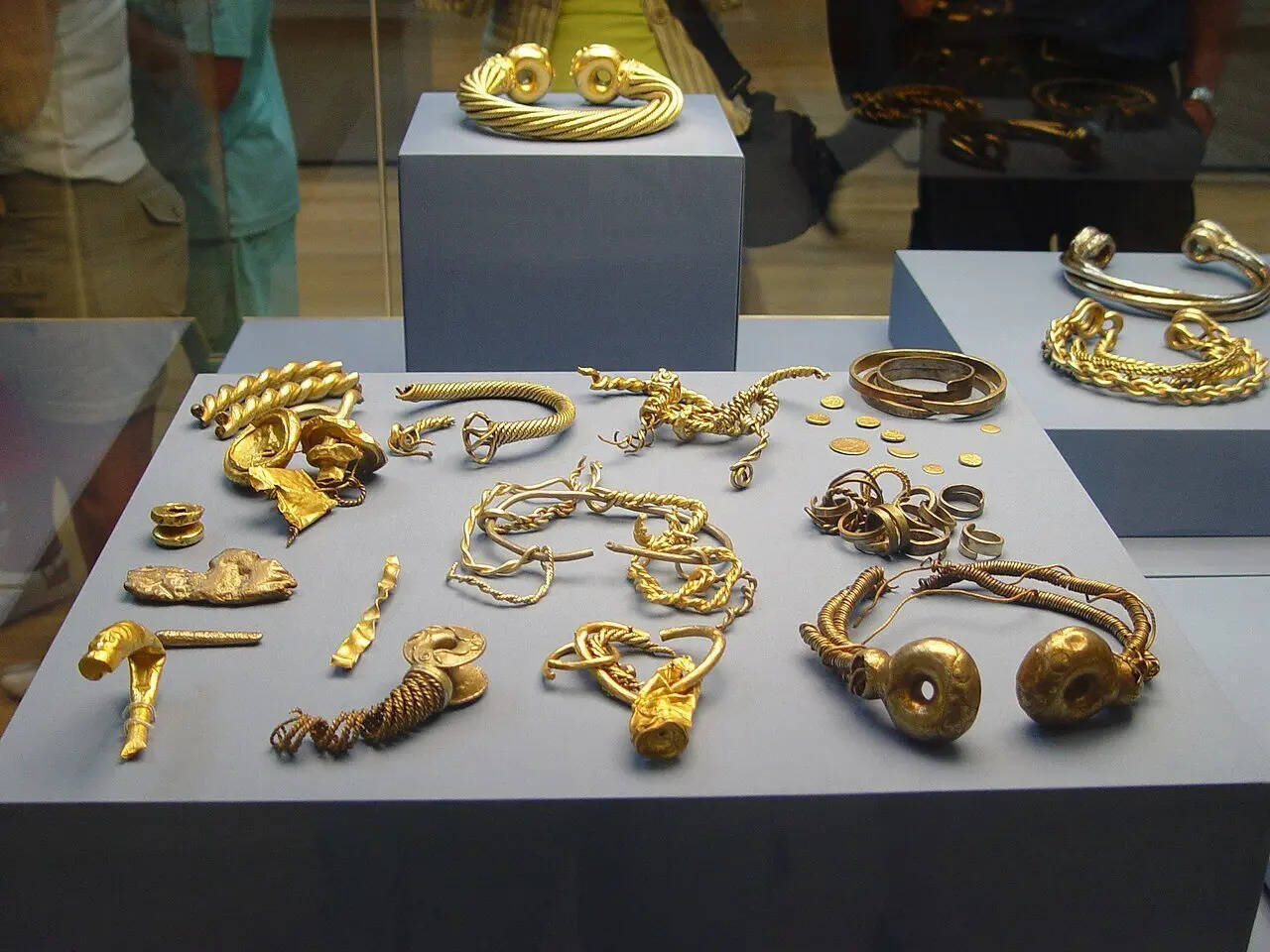
Initially thought to be emergency hoarding, scholars now interpret the find as intentional archiving, revealing a prosperous and socially complex Celtic society. The discovery offers insights into ancient craftsmanship and the lifecycle of valuable possessions. Image credits: British Museum, via Wikimedia Commons
Insights into ancient craftsmanshipThe torcs, in particular, provide us with a window into the craftsmanship and metallurgy of that era. Some of these torcs are thick and twisted golden rods, while others have hollow-cast ends decorated with the characteristic spirals of Celtic culture. These artefacts indicate that the residents of Norfolk 2000 years ago were highly skilled in metalworking and goldsmithing.It is the combination of brilliance and fragmentation that gives the story of Snettisham its human quality. Alongside the brilliant neck ornaments are found hundreds of fragments and pieces. According to archaeologists, the fragments represent the lifecycle of precious possessions: parts that have been worn out to the point where they break; parts that have been purposely broken down in order to make use of them again; and lastly, parts that have been preserved as heirlooms before finally being buried.It serves almost as a gentle prod to our current era, bringing into perspective the fact that all the maps that we have currently been created on top of a host of stories that lie hidden underground. What started as a routine ploughing exercise turned out to be an excavation into Celtic culture, bringing to light a society that was highly prosperous and socially complex. Over 50 years later, the Snettisham hoard continues to fascinate and proves that occasionally a lost world requires little more than a pair of sharp eyes.