


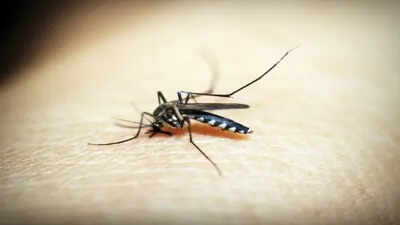
Since time immemorial, the reasons for where we choose to live and our spread across the globe have been attributed to kings, conquerors, and the search for gold. We look into history and picture great architects and conquerors responsible for the monuments of olden days. However, recent, intriguing research suggests otherwise. There is another force, a microscopic one at that, which has played its part for tens of thousands of years in moulding our world. The malaria parasite appears to have directed our destiny for over 70,000 years.However, malaria is not just a health crisis of today’s world but rather an old companion that has been part of mankind throughout millennia. The parasite not only made humans ill, but it also forced them to adapt their lifestyle to be able to survive. It made ancient civilisations move from the lush and dangerous valleys in Ethiopia and Southeast Asia to higher ground, where there was less likelihood of contracting the disease. Such a process left its mark on our genome as well as on how humanity colonised the planet.A biological map of ancient human migrationIn order to understand this connection, one needs to go back in time to an era when our ancestors did not yet keep records of events. Researchers have attempted to reconstruct the complex relationship between our ancient relatives and the disease by analysing the genetic code. In one study published in the journal Science Advances under the title Malaria shaped human spatial organization for the past 74 thousand years, the scientists show that malaria has played a vital role in shaping our migration routes since we left the African continent.People did not wander around the globe by coincidence. They wandered within a terrain of terror, which defined safe pathways through the threat of malaria. In areas where the disease was prevalent, people evolved genetically to protect themselves from it. The most famous example is the sickle cell mutation, which offers natural resistance to malaria but at great personal cost. It demonstrates the desperate struggle for survival that was required back then. We were essentially forced to change our own genetics simply to survive.
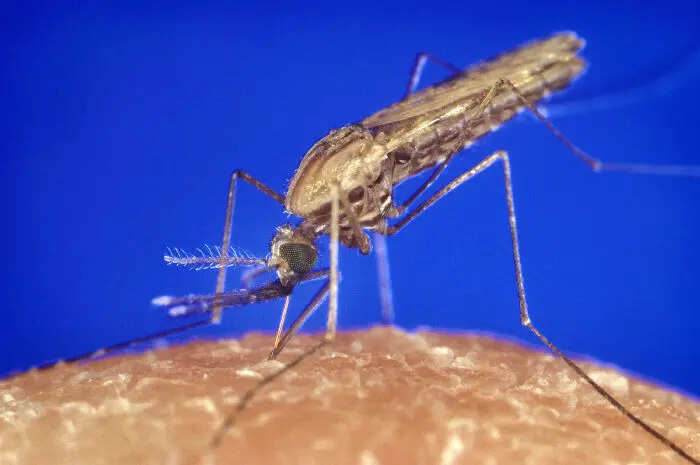
This ancient battle for survival not only influenced our genetic makeup, like the sickle cell mutation, but also dictated societal structures and the very distribution of human genetic diversity across the globe. Image Credits: via Wikimedia Commons
It is not only because this war weakened the insects themselves; it also influenced the way we formed our societies. Insects have a preference for stagnation and humidity. Thus, ancient people decided to reside in windswept ridges and arid regions. This choice was not made by convenience; it was a matter of survival. Indeed, this research shows that the formation of our habitats was an instinctive reaction to the presence of danger in the air. We became architects of survival by building our world with elements where there were no mosquitoes.The genetic legacy of the world’s greatest battleMalaria did not influence us exclusively through our choice of living areas or building materials. It has affected the deepest level of our existence as a contemporary society. Evolution is commonly perceived as a gradual process taking place far from the modern era; however, it is evident that malaria pressures us into constant adaptation to our environment. Researchers can determine the legacy of malaria outbreaks by comparing the genetics of different populations.From this angle, history alters our understanding of what it meant for humans to evolve. It is not simply a case of surviving against predators and manipulating tools, but overcoming a minuscule enemy which poses the greatest challenge of all. History alters how we perceive our forefathers, for diseases did not simply plague them, but also extremely resilient individuals who managed to inhabit the entire globe in the face of constant biological danger.This history is particularly evident when we look at the way different ethnic groups are distributed today. The multi-disciplinary team behind the research found that the legacy of this 74,000-year struggle is a major reason why human genetic diversity is so high in some areas and lower in others. Malaria acted as a barrier that prevented different groups from mixing, effectively creating isolated pockets of humanity that evolved in their own unique directions.As we strive to eliminate malaria today, we come to the end of an era that has existed since the beginning of time itself. Reflecting on this period that spanned some 74,000 years offers us insights into human tenacity as well as how far we can go in ensuring our survival. It reminds us that no matter how much we believe we dominate our world, we still coexist with mysterious forces. Whereas a parasite defines our past, our future lies in what we have learned from fighting against it.